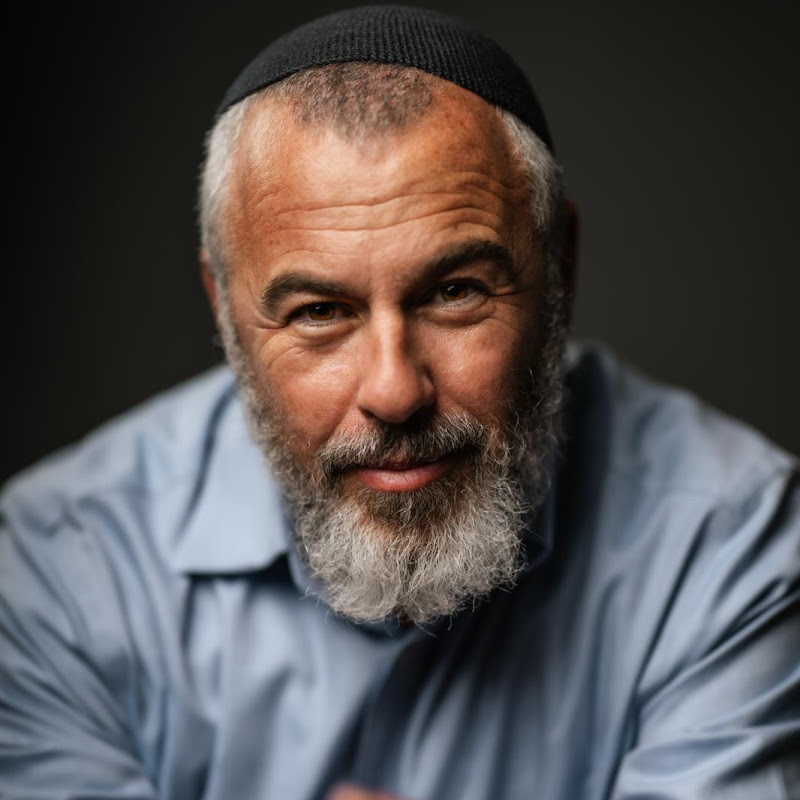
Transcript [00:00] All right, folks. Esher here. I am with [00:02] Dr. Noam Arnon, world expert in the tomb [00:04] of the patriarchs and matriarchs. We're [00:06] in the city of Hebrron. That's where the [00:08] tomb is. And we're talking today about [00:10] the presence of God. What buildings, [00:13] what things in this world, physical [00:14] things, can make the presence of God [00:17] come down to this lower domain? And the [00:20] reason we're talking about this is [00:21] because the Torah portions that we're [00:23] dealing with right now are not about law [00:26] and they're not about stories of the [00:28] Jewish people. They're not about being [00:30] in the desert. They're not about Moses. [00:32] They're really about the construction [00:35] of structures and vessels and vestments. [00:39] That's clothing of the priests. And that [00:42] whole mechanism is there in order to put [00:44] God's presence in this lower domain. Is [00:47] that a good introduction, Dr. Nomaron? [00:48] Is that correct? [00:49] >> It's a good intro introduction. [00:52] And uh what we want to emphasize [00:55] is the presence of Godina [00:59] here in because our sages our said [01:06] >> the forefathers are like the chariot of [01:09] the of God of the divine presence. [01:12] >> All right. So let's just make some terms [01:14] clear to everybody. You know, a lot of [01:17] Gentiles also watch, non-Jewish people [01:18] watch my programming and they're very [01:20] interested in this in these things. Is [01:23] the Hebrew word. We have the word uh [01:25] let's let's help them with the etmology [01:27] of this word. [01:29] >> Is dwelling [01:31] >> is like living in somewhere, [01:32] >> right? [01:33] >> Abraham dwelt in [01:36] this is what the Torah said. [01:38] >> So when we say about Mishkan, it's a [01:40] place of dwelling, [01:41] >> right? as is to say that God somehow or [01:46] one spark of the divine entity is shen [01:50] is dwelling in this place [01:54] >> and the word the modern word means [01:56] neighborhood a is a neighbor somebody [01:59] who dwells amongst you according to the [02:03] purpose of this world is to bring God's [02:06] presence into the lower domains so these [02:09] things that we that we effectuate God's [02:12] presence is is a big deal. A very simple [02:15] basic example of that is the mizuza. [02:18] When you affix a mizuza to your [02:20] doorpost, you're saying, "God, come into [02:22] this household. Come into this family. [02:25] Be with us. Live amongst us." Which is [02:27] also, by the way, very scary, right? [02:29] That's a big deal to have God in your [02:30] midst, right? It's not simple thing. [02:32] >> Yes. It's like having a camera watching [02:35] you 24/7. [02:38] And uh you you better be well. You [02:40] better behave, man. That's right. [02:42] >> Because you remember God is with you. [02:44] >> God is not in the only in the skies in [02:48] heaven. God is also here in this world. [02:52] >> That's right. By the way, when I lived [02:53] on the Mount of Olives and I had the [02:56] Temple Mount in my window, uh when I [02:59] would speak, [03:01] if I would curse or say lashon harab, a [03:04] slanderous speech, I would develop [03:06] sores. Yes. I'm telling you, I would [03:10] develop sores in my mouth and I'd be [03:12] like, "Oh, oh, oh, I I I [03:14] >> wow, [03:14] >> I I did something not right." And that's [03:16] that's the level when you live in [03:18] proximity to the Harabai, to the Temple [03:19] Mount. Okay, we are here in Hebron. Uh [03:23] in the midst of Hebrron is this [03:25] incredible structure called the tomb of [03:26] the patriarchs and matriarchs. It's a [03:29] three and a half thousand-y old tomb. [03:32] On top of which is a 2,000-y old [03:34] building. You have spent your life [03:36] studying this building and and [03:38] understanding it and and in these Torah [03:40] portions where we talk about God's [03:42] presence. You started telling me [03:43] yesterday that this this is a vehicle [03:45] for God's presence. You start explaining [03:47] to us right now that Judaism says that [03:49] the forefathers are a vehicle for God's [03:52] presence in this world. What does that [03:53] mean? It means the forefathers dedicated [03:57] their lives, their spirit, their soul, [04:01] all their life were dedicated to somehow [04:05] to spread the spirit of God amongst the [04:08] people around them. They were not Jewish [04:11] people. I mean that time of course all [04:13] the Gentiles around them and the avot [04:17] especially Abraham. [04:18] >> Avote is forefathers. forefathers [04:20] >> especially Abraham and with him of [04:22] course Sarah. They taught the people to [04:25] believe in God. They taught the faith [04:28] the [04:29] belief in God and the and to implement [04:33] the values that God wanted to teach us [04:36] to implement them in their life. [04:39] Especially the mercies they was so you [04:41] know helping the people around having [04:44] guests all around and teaching the [04:47] people and they they they positioned [04:50] themselves on the uh paths of the [04:53] merchants right uh on on the ancient on [04:57] Beer Cheva for example uh and these [05:00] places where where where the the the the [05:02] what's it called the the merkantile [05:04] paths they have different names for this [05:06] is it [05:08] >> right people walk on the street on the [05:10] ways you know today we go to Burba it's [05:14] 40 minutes from here from [05:16] >> right [05:16] >> then to go to Burba was a day or two [05:20] >> I mean people should have some rest some [05:22] food some water in the desert right [05:24] >> this is what Abraham say I give water I [05:27] give I help the people and I help them [05:30] also [05:32] to get to the to the correct [05:36] feelings this is what Abrahamu [05:39] And of course, his sons, [05:41] >> Abra, Aino is Abraham, our forefather. [05:43] That's why we say it in Hebrew. So all [05:45] the lives of the fathers Abraham and [05:47] Sarah, Jacob and Isaac and Rebecca, [05:50] Jacob and Leah and Rachel, they are like [05:53] the as you say the vehicle, the chariot [05:55] of the divine presence [05:57] in Hebrew. [05:59] >> When the king is sitting in his royal uh [06:04] chariot [06:06] h and he can appear to the world and say [06:09] you see I a king. Now the wheels of this [06:12] chariot the forefather the three [06:14] forefathers and King David these are the [06:16] four wheels of the chariot [06:18] >> right so so so Judaism says that the [06:21] fourth wheel was King David I came up [06:24] with a new phrase and I think that it's [06:25] going to lead us into this conversation [06:28] I came up with a new thought Dr. Nomar [06:30] Non I came up with a new thought which [06:31] is the first person that has the full [06:34] right to be called Israel. Jacob was [06:37] named Israel but his name switches all [06:40] time back to Jacob. Who was the first [06:41] real Israel? That was King David because [06:45] he united the nation the tribes because [06:47] he built Jerusalem. He prepared the [06:49] temple pushed back the enemies. Made the [06:51] borders. He created the first state of [06:55] Israel. The first state of Israel. So he [06:57] fulfilled as you were saying that he's [06:59] the fourth wheel. He fulfilled the dream [07:00] of the forefathers and mothers to unify [07:02] that nation and make a Jewish state [07:05] >> and he was nominated as a king here in [07:07] Hebbron. [07:08] >> Mhm. [07:08] >> All the 12 12 tribes they feel in Hebron [07:12] like having the house when you go to [07:15] grandpa in Verma if you if you remember. [07:18] >> Sure. [07:19] >> It's the house where all their children [07:21] and grandchildren feel at home. [07:23] Everybody could feel at home in Hebron [07:26] because this was used to be and then [07:29] after then the center of the entity of [07:32] the nation of the unity of the nation. [07:35] So they came here to say to David you [07:37] will be our king [07:39] >> not only the king of Judea which is one [07:41] tribe [07:41] >> which is which is what one tribe [07:43] >> one tribe is king of Judea he was before [07:46] >> but then you come a king of Israel. Now [07:48] they all the people from all over the [07:51] the nation came here to nominate Davidid [07:55] and this is where they said David Mel is [08:00] David the king of Israel. [08:02] >> Now King David is a famous name all over [08:04] the world like the name Abraham. These [08:07] two names actually as you said actually [08:10] they appeared in Hebron. Abraham. The [08:12] name Abraham does not exist in the [08:15] Bible. [08:17] Only in Hebron. Before then he was [08:19] Abraham. Ab Ra M. Now then in Hebron his [08:24] name was changed by God to Abraham. [08:27] >> God added the hey ha to his name. [08:31] >> Right? [08:32] >> And King David as a king of Israel [08:34] appeared in Hebra. I mean these two huge [08:38] persons and leaders of the of the world [08:41] appeared in Febru [08:52] tomb of the forefathers [08:54] is actually very very similar to the [08:57] Mishkan to the tabernacle that were [08:59] built by the people of Israel in the [09:01] desert. [09:02] >> Let me explain that for a second. So, so [09:04] on top of the cave, the cave complex [09:06] which houses the tombs of Abraham and [09:09] Sarah, Isaac, Rebecca, Jacob, and Leia, [09:11] today stands a giant monolith. A gi not [09:15] not monolith, that's not the right word. [09:16] What's the right word? [09:18] >> Structure. [09:18] >> Uh, right. But it's a [09:20] >> mon monumentalic [09:23] structure, [09:24] >> right? Monumental structure in a in a [09:26] sarcophagus. Uh, it's not the right [09:28] word. [09:29] >> Mosum. [09:29] >> Mausoleum. Right. It's this giant [09:31] structure. And one of the things that [09:33] you've studied and that structure is [09:35] there whole today. It's been added on to [09:39] it was built by King Herod. Uh you can [09:42] still see the Herodian stones, the [09:45] Herodian masonry, the framed stones [09:47] outside just like the western wall. But [09:49] the western wall and other places that [09:51] Herod built are all ruins today. The [09:53] tomb of the patriarchs and matriarchs, [09:55] the machella stands whole. And Dr. Naron [09:59] has has been studying it. uh and the the [10:02] structure and the meaning of the people [10:06] and the life that they led. Uh that that [10:08] has been the focus of your study and [10:10] this that's where this conversation [10:11] really started today. What you're [10:12] talking about is that the that the Melah [10:15] that the that the Herodian structure is [10:18] similar to the Mishkan. Well, what's the [10:21] symbolism of that? The tabernacle. [10:23] >> The Mishkan itself was actually arounded [10:27] by a yard, a very big [10:29] >> surrounded [10:30] >> surrounded by a yard mishkan, [10:33] >> right? which is 100 kibutes and 100 amma [10:37] from one side and 50 am from the other [10:39] side means about 50 to 25 m and the [10:44] shape of the walls around with pillars [10:47] and curtains that actually h cover the [10:50] pillars, [10:51] >> right? [10:51] >> So you didn't see the pillars, [10:53] >> right? [10:53] >> You saw the curtains around, but you [10:56] could see the shape of the pillars [10:58] through the curtains. So the pillars [11:00] >> they jutted out a little bit. They jut [11:01] it out and so you saw a kind of [11:04] >> pillery [11:06] >> around around the around the the [11:08] courtyard of the [11:09] >> Mishkan. [11:10] >> Now when I came to to to study this [11:14] shrine of the forefathers, I asked [11:17] myself what purpose did the ancient [11:21] architecture [11:23] try to to show or try to achieve by this [11:28] building? Now I read again the Mishkan [11:32] the verses this that [11:36] we read this Shabbat and I [11:38] >> this is book of the book of Exodus I [11:41] don't remember which chapter it is but [11:42] it's the chapters that deal with the [11:44] vessels of the tabernacle which include [11:47] the minora the showbread the two uh [11:51] altars right there's the outer outer [11:53] altar that's for the offerings there's [11:56] the inner altar for the incense and and [11:58] of Of course the ark and of course the [11:59] ark which is the heart of it all uh the [12:01] ark of the covenant which is in the holy [12:03] of holies. [12:04] >> Mhm. [12:05] >> So what connection or what idea this [12:10] ancient architecture [12:12] we don't know his name but he was living [12:14] in the second temple [12:16] >> architect. Yeah. [12:17] >> Mhm. [12:18] >> He was living in the second temple [12:19] period. And when they shaped the [12:22] architecture of this building actually [12:24] they combined two worlds together. From [12:28] one side, the classic word, the [12:30] hellenistic Roman world of of of [12:34] the temples that you know all the [12:39] all the pagan temples, [12:40] >> the pagan temples of all the Europe is [12:42] filled with them, [12:44] >> right? [12:44] >> And this is a sort of expression. But [12:47] you in the in the ancient pagan temples, [12:50] you could see the pillars around the [12:52] building, [12:52] >> right? [12:53] >> Here you do not see the build the [12:55] pillars. Here the pillars are covered [12:58] like what? [12:59] >> Like the Mishkan, like the tabernacle. [13:02] So actually they combined two [13:05] >> elements, [13:06] >> two elements, two worlds, [13:09] >> two civilizations. [13:11] >> This was the idea of Herod [13:14] >> because he himself was a combination of [13:17] these two things. [13:17] >> He wanted to combine or to unite the two [13:20] worlds, the Roman world and the Jewish [13:22] world. And from the Jewish point of [13:23] view, you could see the the [13:28] tabernacle and the around it. The [13:31] pillars are covered. And this is what [13:34] they did here with stone. Not like not [13:36] with wood and clothes like the Mishkan, [13:40] but here they did it with stone. But you [13:43] still see the same design of the Mishkan [13:46] >> actually expressed by this building. And [13:48] and and the point therefore you're [13:50] making is that the purpose of the tomb [13:54] of the patriarchs and matriarchs [13:56] structure is to be a place of the to [14:00] draw down the god's presence. Is that [14:02] right? [14:02] >> Exactly. To express the idea that [14:04] aotina. [14:06] So when see the building [14:08] >> let me just translate that again. The [14:09] forefathers are the vehicle or the [14:12] carriage for God's presence. [14:14] So when you see the building you [14:17] understand what people what the ancient [14:18] jewels felt by building this building [14:22] and later on the same design around the [14:25] temple mount because at the temple mount [14:28] you could see the same design of pillars [14:31] around again covered pillars you didn't [14:34] see you didn't see independent pillars [14:36] like in the pagan [14:37] >> are you talking about the outer walls [14:38] >> the outer walls yes what the western [14:40] wall is [14:41] >> the western wall is only the lower part [14:43] >> right [14:44] >> of the wall because above that you could [14:46] see the pillars [14:47] >> right [14:48] >> you could have seen it in the past [14:50] unfortunately as you said [14:52] >> the temple is destroyed [14:54] >> but the building of the tomb of the [14:58] patriarchs is [14:59] >> I would say it's it's alive [15:02] >> right [15:02] >> you see people come and feel the feel [15:06] the the the divine presence here and get [15:10] so closer to the fathers to their [15:12] mothers [15:13] and and and pray and cry and joy. [15:17] >> And I have seen, by the way, just to [15:19] bring it into today, I've seen a great [15:22] uptick in visitation to the tomb of the [15:24] patriarchs and matriarchs uh at the [15:26] Makah here in I asked the police about [15:29] it. They said that there's a 50% rise in [15:32] visitation here. The the parking lot is [15:35] full. And and let's be honest, it's it's [15:37] easier to get here today, but still, you [15:39] know, one could one could be nervous [15:41] about it, but people are coming in [15:43] droves and you could see that they're [15:45] really connecting to the you could see [15:47] it on their faces. [15:47] >> Exactly. This is why, by the way, if you [15:50] opened a Jewish prayer book, the sidu [15:53] and the most important prayer is the [15:57] Amida standing, [15:58] >> the 18 benedictions, the Ezra Amida [16:01] prayer, which means the the standing. [16:03] It's a it's a it's a it's a a meditative [16:06] uh and central prayer in the Jewish uh [16:09] in the Jewish tradition. [16:10] >> And then the first blessing is birkavot. [16:14] >> You say to God, I'm standing in front of [16:17] you, God, but I'm not alone. [16:20] I'm standing here with my fathers. [16:22] Elohim, Eloh, [16:25] I recognize [16:26] >> God of Abraham, God of Isaac, God of [16:27] Jacob. I recognize myself as belonging [16:31] >> to this [16:33] entity and [16:36] and presence that was actually [16:39] symbolized [16:41] and brought to this world by these holy [16:43] persons about Abra. [16:46] >> So you have the tabernacle in the desert [16:49] that was a vehicle to bring God's [16:51] presence into this lower domain. You [16:53] have the tomb of the forefathers and [16:55] mothers in Hevron which is by design and [16:59] also by by our tradition that these men [17:02] uh and and their wives brought God's [17:04] presence into this uh lower domain. And [17:06] then you have the temple in Jerusalem. [17:08] >> Exactly. Exactly. [17:09] >> They're all as you explained to me [17:11] yesterday, they're all doing the same [17:13] the same action. Uh and I thought that [17:15] was very important to discuss that [17:16] because at the end that's what really [17:18] what we're doing here, right? Uh but but [17:20] let me let me ask you this question [17:21] though. [17:23] What therefore is the purpose of Hebrron [17:28] visav Jerusalem? Okay. What do you need [17:31] a a tomb of the patriarchs and [17:32] matriarchs if you have a temple in [17:34] Jerusalem? That's where you meet God. [17:36] That's where the capital is. So what [17:37] what role does Hebron play then? [17:40] >> As the same as you should have a [17:42] foundation to the house because he is [17:45] the foundation, [17:46] >> right? is the base the basis that this [17:49] house is standing and then you have on [17:51] the top you have the holy of holy yusha [17:54] but if you don't have the foundation you [17:56] don't have a building you don't have a [17:58] house if you understand that is still [18:01] having the same part in the Jewish [18:04] history of the foundation of the roots I [18:07] would say it's like a tree you want a [18:10] big tree you should have the very deep [18:12] roots and strong roots in the land in [18:15] the [18:16] And we have a Mishna that says that the [18:20] work in the temple does not begin until [18:23] there's light over Hebron. Am I right? [18:25] >> That's right. That's right. They say it [18:26] in Mishna and in the same [18:29] >> which the first [18:32] >> it's the [18:34] it's mentioned in Yoma and Tamid. [18:36] >> Yeah. Before every day, every day before [18:40] beginning the work in the temple, they [18:43] would climb on the on the tower and [18:46] watch to Hebron and say, "Okay," [18:48] >> which is to the south, which is to the [18:50] south of Jerusalem, [18:51] >> the light was in on Hebron begin the [18:54] work. So without having the light from [18:58] Hebrron, you don't have [19:01] >> There you go. Well, I I hope that you [19:03] enjoyed this discussion about bringing [19:04] God's presence into this world. At the [19:07] end, that is what it's all about. And [19:08] that's what Israel is supposed to be [19:09] doing. That's what the state of Israel [19:10] is all about. That's what building [19:12] Jerusalem is all about. That's what this [19:13] whole issue of the third temple that [19:15] we're working on is all about. It's not [19:16] about our strength and our success. And [19:19] you know, we could have been successful [19:20] in in Vienna and in New York City as [19:22] well. The whole point of coming back to [19:23] the land is to bring God's presence into [19:25] this world. And there's so much effort [19:27] to stop that. That's a clue uh that we [19:29] are actually on the right track because [19:31] all the dark forces in this world don't [19:32] want to see a light emanating from [19:34] Jerusalem or that light that's the basis [19:36] of it all here in [19:37] >> Hebrron. Go ahead. And also in the mid [19:40] it said the announcement of the red [19:42] redemption will first the announcer will [19:45] come to the [19:47] >> will come to the fathers in he [19:49] >> right Elijah the prophet or the or the [19:51] the annunciation yeah [19:53] >> and say wake up my dear fathers [19:56] redemption is beginning and then go to [19:59] >> ism that's an amazing midrash and and we [20:02] should be uh we are meriting that's the [20:04] truth we are meriting to see that [20:06] actually coming to fruition [20:08] Yes, we have to be thankful for actually [20:09] the great time that we're living in the [20:11] revelation. Folks, I hope you enjoyed my [20:12] discussion with Dr. No Arnon here in [20:14] beautiful Hebrron. Of course, we didn't [20:16] mention, but obviously the the temple is [20:18] behind me. And this tapestry was made by [20:20] a gentile uh by a non-Jew who loves [20:23] Israel and and and dreams for that third [20:25] temple. And I am proud that I was able [20:27] to put up this tapestry here uh in order [20:29] to say yes, the nations are also part of [20:31] it. [20:33] And this building was built by the king [20:35] Herod, the same king who built here the [20:38] shrine of the forefathers and mothers. [20:40] The [20:40] >> shrine of the forefathers and mothers is [20:42] here waiting for you to come and visit. [20:45] You can come and visit, of course, [20:46] through our weekly tours, [20:48] hebronfund.org/tour. [20:51] Easy to get to the site, easy to come [20:53] and see it for yourself. It's amazing. [20:54] And soon uh we will be also taking you [20:57] to the third temple. We're working on [20:59] that full-time. If you want to be part [21:01] of that work, then please visit [21:02] fightforisrael.org. org fight the [21:04] number4israel.org [21:06] and if you want to support our [21:07] programming it's buy me a coffee.comish [21:10] Dr. Dr. Norm Arnon, thank you very much. [21:12] And may we merit to bring God's presence [21:14] into this world. God bless you wherever [21:16] you are. Lots of love, lots of blessings [21:18] and shalom.