Transcript [00:00] Good evening. [00:02] >> Now, let's begin with the politics. How [00:04] damaged [00:05] How serious rather or damaging is this [00:08] public disagreement between Netanyahu [00:10] and Trump? [00:12] >> I think President Trump and the [00:13] Americans have said this now that Israel [00:15] is in election season now and in [00:17] elections Netanyahu has to be very [00:20] attentive to public criticism. The fact [00:22] is in Israel nobody believes Hamas is [00:25] going to disarm voluntarily. And that's [00:28] because Hamas has said so itself. It's [00:31] unfortunate that this is being framed as [00:33] Israel rejecting the plan while Hamas [00:35] accepts it after Hamas voided it of [00:38] content. The Board of Peace has been [00:40] very clear. Under the plan first Hamas [00:43] must disarm then Israel will withdraw. [00:46] But Hamas said, "Yes, we will disarm if [00:49] Israel withdraws first." That's not how [00:51] it works. It's the other way around. So, [00:54] we need to see the real disarmament of [00:56] Hamas, the full demilitarization of [00:59] Gaza. That's the way to end this war for [01:01] good. That's the way to create a pathway [01:04] to peace and reconstruction. It's not [01:06] going to happen if Hamas is trying to [01:09] use those weapons as leverage to force [01:11] an Israeli withdrawal instead of doing [01:14] what the Board of Peace is demanding and [01:16] disarm fully and immediately. [01:18] >> Okay. As you said, Israel says there'll [01:20] be no withdrawal until Hamas is fully [01:22] disarmed. But realistically how's that [01:24] achieved without an open-ended military [01:26] presence in Gaza? [01:28] >> It's not just Israel saying that there [01:31] will be no withdrawal until Hamas is [01:33] disarmed. The Board of Peace is saying [01:35] that. Not just in a tweet last week. [01:38] Last night Nickolay Mladenov, the [01:40] Director-General of the Board of Peace, [01:42] gave a rare interview to Israeli media. [01:45] And he said that until there is full [01:46] decommissioning of Hamas's weapons [01:49] Israel is not expected to withdraw. The [01:52] fact is the Hamas government of Gaza is [01:54] still committed to the destruction of [01:57] Israel and [clears throat] the [01:58] annihilation of its people. And October [02:00] 7th taught Israel a very big lesson [02:03] about the dangers of dangerous [02:05] illusions. No one believes that Hamas is [02:08] going to disarm voluntarily. Hamas [02:11] itself has said it has no intention to [02:13] disarm. So we need to see full [02:15] international pressure on this terrorist [02:17] organization that dragged the whole [02:20] Middle East into a barbaric regional war [02:22] with the October 7th massacre to disarm [02:26] fully. Unless that happens, there can be [02:28] no reconstruction in Gaza or the [02:30] reconstruction will just mean the [02:32] reconstruction of Hamas and the [02:34] reconstruction of all its tunnels to [02:35] wage another war. Hamas has to disarm. [02:38] That's the key to any future progress. [02:40] >> Okay. So Hamas has though said they [02:43] accept the road map with conditions. [02:46] Now, why not test that commitment [02:48] through negotiations before rejecting [02:50] the plan altogether? [02:52] >> I think Israel believes that this plan [02:54] is doomed to failure and that giving it [02:56] a chance will only make things worse [02:59] because while Hamas drags its feet and [03:01] refuses to disarm, the world puts in an [03:05] international force of mostly soldiers [03:07] from Islamic countries in Gaza that [03:10] would act to shield Hamas from the IDF. [03:14] The original 20-point plan says that [03:17] Hamas members who commit to peaceful [03:19] coexistence will get an amnesty. Now [03:21] we're talking about having a foreign [03:23] military force in Gaza that will stand [03:25] between the IDF and protect Hamas [03:28] terrorists who are refusing to disarm [03:31] and refusing peaceful coexistence. As I [03:33] said, the October 7th massacre taught [03:35] Israelis a very dangerous lesson about [03:37] believing dangerous illusions. And [03:40] Israel believes that if you put a [03:41] foreign military force inside Gaza while [03:44] Hamas continues to refuse to disarm, [03:47] that will allow Hamas to buy time. It [03:49] will allow Hamas to rebuild its jihadist [03:51] army instead of dismantling, and Israel [03:54] wants to see full pressure on the Hamas [03:56] regime that started the barbaric October [03:58] 7th war to disarm and not to be given [04:01] any more excuses to keep the Middle [04:03] Eastern conflict. [04:04] >> Okay, Eylon, more than 1,250 [04:07] Palestinians have reportedly been killed [04:10] since the ceasefire took effect. At what [04:12] point does Israel's continued military [04:14] action become impossible to defend? [04:19] >> What is impossible to defend is the fact [04:21] that Hamas is continuing to rebuild its [04:23] terrorist army in order to stage another [04:26] October 7th massacre. Since it accepted [04:29] the ceasefire and agreed that it would [04:31] disarm, agreed that it would dismantle, [04:33] agreed that it would relinquish power, [04:35] Hamas has gone back to its terrorist [04:36] activities, rebuilding its terrorist [04:39] army, keeping the people of Gaza under [04:41] its oppressive terrorist regime. Israel [04:43] has no intention to let the perpetrators [04:46] of the October 7th massacre plan another [04:49] barbaric attack in plain sight. And that [04:51] is why the key to any progress, the key [04:54] to peace, the key to reconstruction is [04:56] Hamas disarming, doing exactly what it [04:58] committed to do under the October [05:00] ceasefire instead of trying to rearm in [05:03] plain sight and expect that the world is [05:05] going to give it time. [05:07] >> Eylon, my last question to you. Why [05:09] should Israelis or Palestinians uh [05:12] believe further military pressure will [05:14] produce a result it hasn't delivered so [05:17] far? [05:18] >> Because Hamas is a shadow of what it was [05:21] when it launched the barbaric October [05:22] 7th massacre, invaded Israel to behead [05:25] people, commit barbaric acts of sexual [05:27] violence, and steal over 250 hostages [05:30] including women and babies and elderly [05:33] people and bodies to use as bargaining [05:36] chips. If Hamas is given a breather, it [05:39] will use that to rebuild its terrorist [05:41] army, and that's exactly what it is [05:43] doing now. Hamas's leaders need to [05:45] understand that their backs are against [05:47] the wall. The international patience is [05:49] up. That they don't get to rebuild their [05:51] rockets and rebuild their tunnels. They [05:53] dragged the Middle East into a barbaric [05:55] war 3 years ago. It was a horrific [05:57] mistake and they need to be consigned to [05:59] the dustbin of history so Israelis and [06:01] Palestinians can move towards future of [06:03] peace together and not be held back by [06:06] their barbaric extremism. [06:08] >> Eylon, thank you so much.
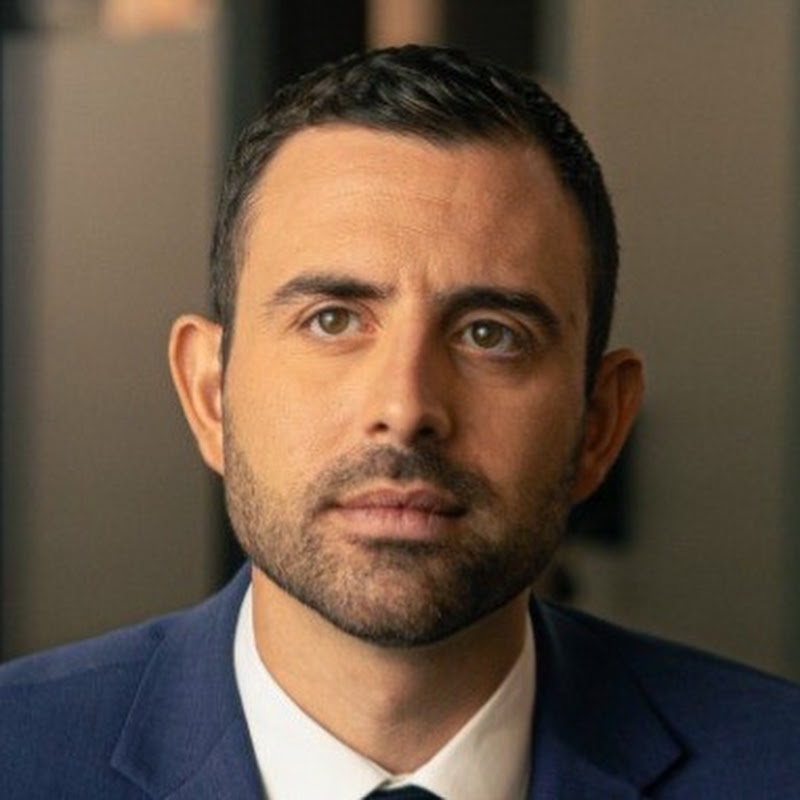
Hamas’ full disarmament is the key to ending the war and creating a genuine pathway to peace and reconstruction in Gaza, Eylon Levy argues, warning that allowing Hamas to rearm risks another October 7th massacre.
In this urgent interview on anewz, former Israeli national spokesman Eylon Levy explains:
Hamas and disarmament: Why Hamas must fully dismantle its weapons and terrorist infrastructure before Israel can withdraw from Gaza.
The October 7th lesson: Why Israelis view Hamas’ continued refusal to disarm as proof that the terrorist group cannot be trusted to voluntarily give up its weapons.
The ceasefire and reconstruction: Why international pressure on Hamas is essential to prevent reconstruction efforts from simply rebuilding Hamas’ tunnels, rockets and military infrastructure.
Military pressure: Why Eylon argues that Hamas has been severely weakened but is already attempting to rebuild its terrorist army.
The path to peace: Why Hamas’ removal from power is essential for Israelis and Palestinians to move toward a peaceful future.
The debate over Gaza’s future reflects a broader struggle between the pursuit of peace and the threat posed by terrorism. Eylon argues that reconstruction and long-term stability cannot succeed while Hamas retains the ability and intent to wage another war against Israel. The October 7th massacre, he says, demonstrated the dangers of allowing Hamas to maintain its military capabilities.
🎯 “Hamas has to disarm. That's the key to any future progress.”