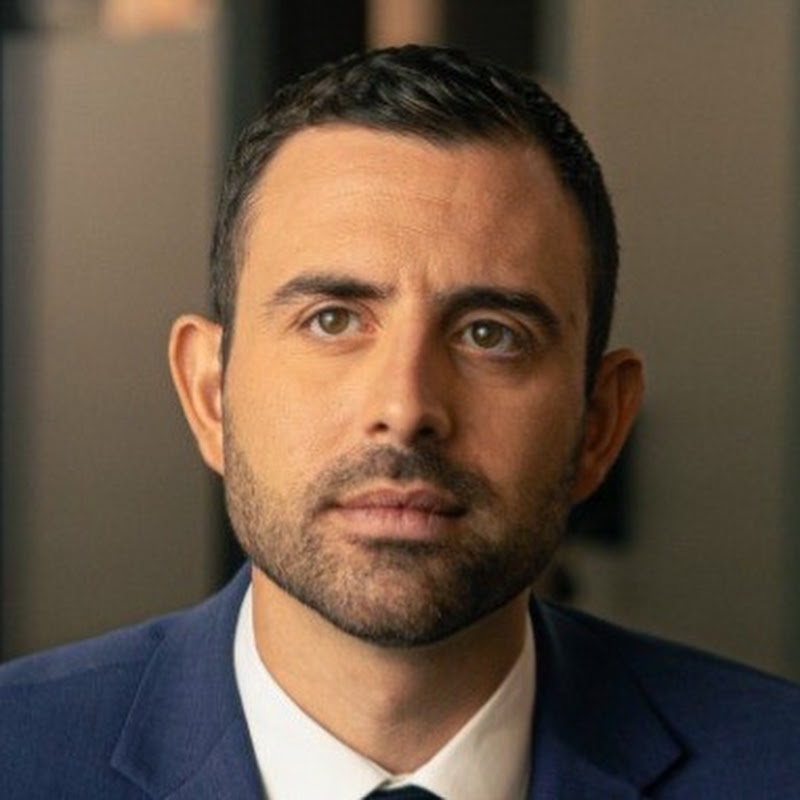
Transcript [00:00] John. Joining me to discuss the UK's [00:02] defense posture and the risks ahead is [00:05] former Israeli government spokesperson, [00:08] Eylon Levy. [00:12] Eylon, thank you for joining us on STV [00:14] News. [00:15] >> Hello, John. [00:17] >> [clears throat] [00:17] >> How are you today? [00:18] >> I'm all right, thank you. Reading the [00:20] news with deep concern, though. [00:23] >> All right. So, talk to me. Iran has [00:26] threatened US bases in Europe and Cyprus [00:29] as reported in been targeted. [00:31] So, can you tell us what currently [00:33] what's what is happening right now about [00:36] the level of threats the UK forces and [00:39] the bases in the region including [00:42] Akrotiri and Dhekelia in Cyprus? [00:46] >> The Iranian regime's threat to Europe is [00:49] extremely serious and needs to be taken [00:51] very seriously. We saw during the last [00:54] war the Iranian regime attacking all of [00:57] its neighbors, not just Israel, but the [00:59] UAE, Saudi Arabia, Qatar, Kuwait, every [01:03] country in the region, and they struck [01:06] Iran they struck Cyprus as well. We know [01:09] that an Iranian drone hit that British [01:11] military base on Cyprus, and Iran's [01:14] missiles and drone [01:16] report [01:18] report today in the media that Iran is [01:22] planning to attack Bulgaria as well as [01:25] Cyprus in response to any future [01:28] American attempts to stop the Iranian [01:31] nuclear weapons program and open the [01:33] Strait of Hormuz. Unfortunately, Europe [01:36] still thinks that this is a conflict [01:38] far, far away that doesn't concern it, [01:41] but Iran's missiles can reach the [01:43] European continent, and they need to get [01:45] serious about the threat that Iran will [01:47] expand that war to protect its [01:50] stranglehold on the Strait of Hormuz and [01:52] to protect its nuclear weapons program. [01:56] >> If Iran escalates and attacks US bases [01:59] on European soil, is Britain [02:02] treaty-bound or politically committed to [02:04] come to the defense of its American [02:07] allies? [02:08] What would that response look like? [02:12] >> Well, the United States is the foremost [02:14] power in NATO, and NATO is a collective [02:17] security pact. In theory, the United [02:19] States could activate that collective [02:22] security clause, tell its allies [02:25] we're attacked, and we want you to step [02:27] in with us, but it hasn't done that. The [02:30] question is what will happen if the [02:31] Iranian [02:32] regime expands its targets to Europe [02:35] itself. Will America's NATO allies get [02:38] involved in taking military action [02:40] against the Iranian regime? I think they [02:43] are should begin to realize that it was [02:46] a mistake to appease the Iranian regime. [02:48] They thought that if they leave it [02:49] alone, if they tell America, you try to [02:52] open the Strait of Hormuz by yourself, [02:54] then the Iranian regime will leave it [02:56] alone. But that's not the case. They are [02:58] threatening to attack countries that [03:00] host American forces. They are on the [03:03] front lines, and they may find that even [03:05] if they don't want to get dragged into a [03:08] war with Iran, Iran will drag them into [03:10] a confrontation, and they have to [03:12] decide, are they going to protect [03:14] themselves, or are they going to leave [03:16] the United States to defend them for [03:18] them? [03:21] >> Uh Levy, I really quite understand your [03:24] point, but I would like to ask you this [03:27] before we finally let you go. Uh looking [03:29] at your country, Israel for instance, [03:33] if this threat really, [03:36] uh you know, gets to, you know, happen, [03:38] how prepared is British military base [03:41] right now? [03:44] >> Well, my country I'm in Israel, and [03:45] Israel is very prepared to defend itself [03:48] against any Iranian attacks. Israel has [03:51] a nationwide network of rocket shelters, [03:54] including in people's apartment [03:56] buildings and even apartments, so people [03:58] know what to do in case of emergency. A [04:01] very sophisticated set of missile [04:03] defenses to blow Iran's missiles out of [04:05] the sky, but no one is downplaying the [04:08] threat from the Iranian regime. Iran has [04:11] used this ceasefire to ramp up its [04:14] production of missiles, ramp up its [04:16] production of drones to make them more [04:19] sophisticated so that they can attack [04:21] civilian targets. And Israelis know that [04:24] if war resumes with the Iranian regime [04:26] because they're determined to hold onto [04:29] the Strait of Hormuz and hold the global [04:30] economy hostage, and they're determined [04:32] to keep on with their nuclear weapons [04:34] program, then Israel will have to defend [04:36] itself. And Israel will do that, it [04:39] hopes, shoulder to shoulder with the [04:40] United States of America. [04:42] >> Fantastic. But then, beyond the military [04:45] angle, what diplomatic steps can UK take [04:48] with NATO and other allies to [04:51] de-escalate this? And what role can [04:53] Israel play? [04:56] >> We need to see maximum pressure on the [04:58] Iranian regime to let go of the Strait [05:01] of Hormuz and open it for international [05:03] shipping. The Iranian regime is pursuing [05:06] a strategy of holding the whole global [05:09] economy hostage to protect its nuclear [05:12] weapons program. It's trying to impose [05:15] tolls on ships in the Strait of Hormuz, [05:17] shooting at ships that don't comply with [05:19] it, to make everyone in the whole world, [05:21] in the UK, in Nigeria, in Israel, pay [05:24] the price with their pocket through [05:26] rising energy prices. And the whole [05:28] world has to make clear we will not [05:30] surrender to Iranian piracy. The Strait [05:33] of Hormuz must be free for international [05:35] shipping, and we're not going to allow [05:37] the Iranian regime to make everyone in [05:39] the world suffer just to protect their [05:41] nuclear weapons program. [05:43] >> Many thanks, [05:45] Eylon Levy, former spokes- [05:48] uh Israeli government. Thank you for [05:50] your time. [05:51] >> Thank you. [05:54] >> The World Health Organization WHO uh