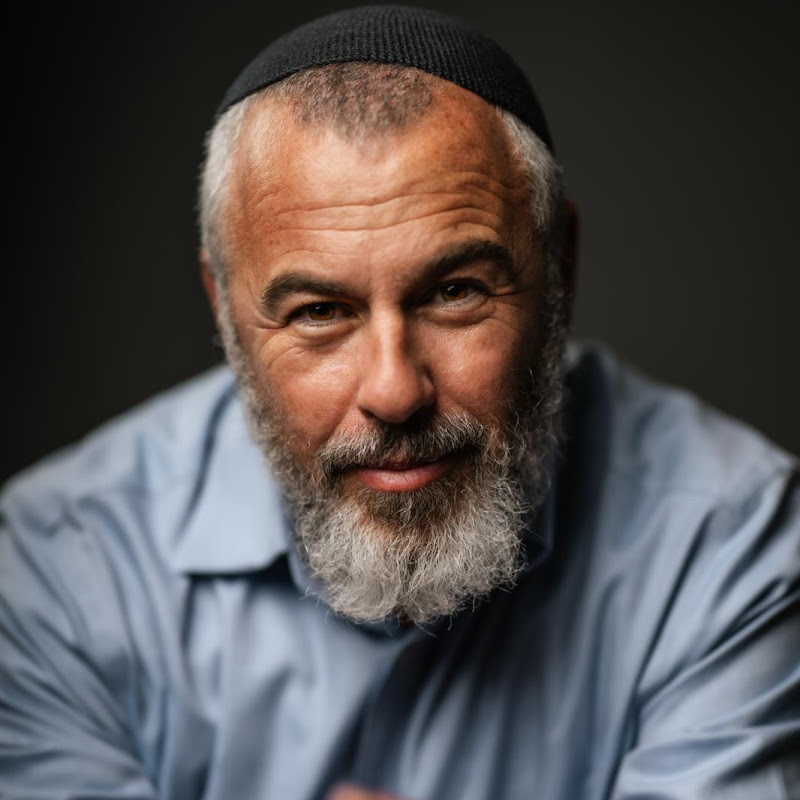
Transcript [00:00] All right folks, Ishi Fleer broadcasting [00:02] from Judea. But at some distance away [00:05] from here uh towards the east is Iran. [00:08] And in Iran and in the capital city of [00:10] Tehran, the blood is flowing. Protesters [00:14] are out there against the regime. And [00:16] the regime is shooting back. And I just [00:18] saw some horrific images about what's [00:21] going on there. Let's take a look. PBS [00:23] got it together for us this in Iran. The [00:25] street demands the end of the regime. [00:30] spews contempt for their leaders [00:34] >> and, declares, this, the, final, battle. [00:37] >> Over, the, last, few, days,, protesters, set [00:39] fire to symbols of the regime's [00:41] repression, including this mosque in [00:43] Thran, and sources of government power [00:46] including municipal buildings in the [00:48] north. [00:50] The response has been ruthless, soaking [00:53] the nation's streets in its citizens [00:55] blood. And now, new footage of the [00:58] aftermath of a massacre. Rows of body [01:01] bags, all believed to be protesters who [01:03] fought and died demanding freedom [01:05] lining the floor of the Harisic morg [01:07] outside of Tran. [01:10] >> The, regime, called, these, victims,, all [01:12] lined up for their loved ones to find [01:14] armed terrorists. [01:16] The toll so high, Morg officials cycled [01:18] through images of the dead so they could [01:20] be identified. Foreign Minister Abasar [01:22] Ranchi aimed his comments directly at [01:24] the US. on a Chinese. [01:26] >> We, do, not, seek, war,, but, we, are, fully [01:28] prepared for it. At the same time, as I [01:31] have repeatedly said, we are also ready [01:32] for negotiations. [01:34] >> If, you, call, them, leaders,, I, don't, know. [01:35] >> Last, night,, President, Trump, confirmed, he [01:37] was considering a military strike. [01:39] >> We're, looking, at, it, very, seriously., The [01:41] military is looking at it and uh we're [01:44] looking at some very strong options. [01:46] >> What's, the, future?, Of, course,, here, in [01:48] Israel, it has a tremendous impact. Iran [01:50] is the sponsor of so many of Israel's [01:53] close enemies. if it's kamas, if it'sah [01:56] if it's the Houthis, this means a lot. [01:58] This is an issue on which Israel's [02:00] future security rests. And not just [02:02] Israel security, but really uh the [02:04] United States and other countries that [02:06] are trying to push back against [02:07] jihadism. Iran is their enemy. So, what [02:10] are we to make of all this? Well, today [02:12] I have a very special guest, somebody [02:15] who knows Iran intimately and knows the [02:17] security issues around Iran better than [02:21] most. His name is Ela Yosan. He's very [02:24] well known here in Israel. He was born [02:26] in Isfahan, Iran. He grew up under the [02:28] Islamic regime. He completed 12 years of [02:30] education in Muslim institutions. [02:33] Studied civil engineering at the [02:34] University of Kashan before leaving [02:36] Iran. Uh he immigrated to Israel in 2003 [02:40] and served for about 15 years in the [02:43] IDF's very famous 8200 unit, which is [02:46] Israel's elite signals intelligence and [02:48] cyber intelligence unit. [02:50] uh he worked in a lot of roles there and [02:52] a lot of commanding roles. During his [02:54] service he received the Israel security [02:56] award from the president of Israel. [02:58] Today he is a researcher and an analyst [03:00] specializing in Iran, the Middle East. [03:02] He's also the founder of the Moletit [03:04] Yehudit movement. We'll talk about that. [03:07] And he's also often appearing on many [03:08] Israeli channels including 14. Channel [03:11] 14 is Israel's Fox News. Uh everybody in [03:14] Israel knows Ela Yosan. Today I have the [03:18] honor of bringing to the program. Thank [03:20] you so much for being with us. [03:35] Where should we start? Maybe we should [03:36] just start with what I showed, which is [03:38] the visuals of blood spilling in the [03:42] streets of Tehran. [03:48] Please explain to us what's going on [03:50] there. Is there a chance to indeed throw [03:52] off the uh moola regime in Iran? [04:03] Shalom. Hello everybody. And I'm [04:04] beginning from the end. [04:10] >> Okay., The, nation,, just, the, nation, by [04:12] itself cannot overthrow the regime. [04:20] >> Okay?, Just, like, the, Iraqis, could, not, get [04:22] rid of Saddam, they needed the [04:24] Americans. So too, the Iranians need [04:25] external help. [04:32] Okay. The Libyans could not get rid of [04:33] Gaddafi. They also needed the Americans. [04:48] Okay. So too uh the the Syrian people [04:50] could not throw off Bashar al-Assad and [04:52] they needed Erdogan to close a deal with [04:54] with Syrian generals and other Syrian [04:56] actors in order to get rid of that [04:58] Syrian regime. So basically what is [05:00] saying is that you need an external. [05:14] >> Okay,, but, you, could, say, maybe, the [05:16] viewers will say but what about Egypt? [05:18] The nation got rid of Mubarak. [05:24] for [05:37] Right. Okay. So, so Yan is saying that [05:41] uh Egypt had just one army, but Iran is [05:44] much more like Germany that has many [05:46] different units. It has the Alkudz [05:48] force, the IRGC, and it has the army. [05:51] They're, very, separated, and, and and [05:53] compartmentalized. So you can't just get [05:55] rid of one. Okay. V. And therefore [06:10] okay. If if if the if the hope is that [06:12] the nation by itself will be able to get [06:15] rid uh of uh of the regime, well, it [06:19] can't do it on its own. the regime is [06:21] too strong. [06:30] Okay. So, if we ask the question about [06:32] how to get rid of the regime, that's a [06:34] different issue. [06:37] Is that a different issue or is that the [06:38] issue that we're talking about? [06:45] is is what's happening in the streets in [06:47] order to get rid of the uh Iranian [06:49] regime. [06:56] >> Okay., Getting, rid, of, the, regime, is, not [06:59] the the issue. It's a separate issue. [07:01] What does he mean by this? [07:11] So he says first and first and foremost [07:15] getting making that regime fall getting [07:17] rid of the Iranian moola regime has to [07:19] be with the agreement of the United [07:21] States. [07:34] Some of the biggest the world's greatest [07:37] contracts for arms were signed between [07:41] Saudi Arabia and the United States. [07:57] Okay. So the these three huge contracts [08:00] were signed. One in Trump's first uh uh [08:04] first uh uh presidency and the second [08:08] one between Obama and the Saudis. And [08:10] just a month ago, $140 billion contract [08:13] between the United States and Saudi [08:15] Arabia under under Trump too. Okay. [08:24] So the question is [08:29] so so the question is why why do the [08:32] Saudis need so much arms and the answer [08:34] is simple their fear is the fear against [08:38] uh Iran? The Saudis fear Iran and need [08:40] weapons to defend themselves. [08:53] Okay. So, so uh Yan is saying that if [08:56] the United States will agree to get rid [08:58] of the Iranian regime, it will injure [09:00] very badly these contracts uh and the [09:04] American arms industry, which is making [09:06] a killing, pun intended, uh making a [09:10] killing off of this arm sales to the [09:12] Saudis. So therefore it's not it could [09:14] not it may not be in their interest to [09:17] get rid of this regime. [09:25] He want he wants to add go ahead. [09:36] So, so hurting hurting the uh arms [09:39] industry will also hurt hurt their uh [09:42] their stocks as well in the stock market [09:44] and the stock market in general. [09:54] >> Okay., And, and, not, just, stock, prices, but [09:58] also uh unemployment in the United [10:00] States because the the arms industry is [10:03] a big employer. And so this has a huge [10:05] impact if indeed these contracts are [10:07] canceled. [10:18] >> Okay,, this, could, have, an, impact, on [10:20] inflation because this is really one of [10:22] the United States's main exports and and [10:25] main main industries. [10:39] So, so he says, well, this also means [10:41] that the Americans will just have to [10:43] close up their bases in in Saudi Arabia [10:45] and Qatar and other places because [10:47] there's there's total security and [10:48] there's no fear and everybody's all [10:50] right. So, the Americans would just [10:51] leave this area. Okay. [11:06] Uh, right. So now now there's there's [11:08] talk that uh Trump wants to somehow [11:11] actualize the Venezuelan oil, Venezuelan [11:15] energy reserves. Okay. [11:36] Ah, so so now now now you'll see on the [11:39] shifting gears and he says if if if [11:41] Trump controls the Venezuelan oil and [11:43] he's going to control the Iranian oil uh [11:45] through getting rid of the Iranian [11:47] regime, then the Chinese are not going [11:49] to be happy with the fact that America [11:50] is going to control 60% of the world's [11:53] oil reserves. And so therefore, China [11:55] doesn't want the regime to be toppled. [11:57] It wants it to stay in place so that [11:59] America will not be in control of all [12:01] that oil. Okay. [12:28] Okay. So, so, so I was saying that uh it [12:32] could be seen as a bifurcated issue. One [12:35] on the one hand is that Iran uh is that [12:38] the United States may not want to see [12:40] the downfall of the Iranian regime for [12:42] what we said which was the arms deals [12:43] and the Chinese may not want the fall [12:46] because they don't want to see the [12:47] control of oil all in the United [12:50] States's hand and therefore there's two [12:51] superpowers who are not so interested in [12:53] seeing that regime fall. Okay. [13:06] Right. So on the 12th day uh of the 12th [13:09] day war uh uh President Trump told Prime [13:13] Minister Netanyahu, "Stop it. I don't [13:15] want a 13th day of war." There's 12 days [13:17] of of bombing Iran. That's it. I want [13:19] you to stop. Okay. [13:40] On the 13th day, 80% of the Iranian [13:43] skies were open and the Israeli ar the [13:45] Israeli IIAF, the Israeli Air Force [13:47] could have done anything and gotten rid [13:49] of any target it wanted to. It basically [13:51] had full control, but Trump stopped the [13:54] war. Why is that? [14:06] interesting globalist. [14:09] >> Okay., So,, so,, so, the, way, the, way, he's [14:11] saying it now, Elioan, our amazing Iran [14:14] expert, is saying is that the fall of [14:16] the Iranian regime has to come with the [14:19] agreement of the powers, the [14:22] superpowers, because it has an impact [14:24] the fall of Iran's regime has an impact [14:27] uh on the superpowering of these [14:29] superpowers, right? It has an impact on [14:31] their on their global hegeimmani. And so [14:34] it's not going to come, it's not going [14:36] to come willy-nilly. It's going to come [14:37] specifically with their agreement. [14:57] Okay. So, so, so therefore the Iranian [15:00] people by themselves are not going to be [15:02] able to get rid of the regime. It has to [15:05] come with the agreement. And Netanyahu [15:07] himself uh paid lip service or said the [15:10] right things to the Iranian people, but [15:13] not with real action. The real action [15:16] rests on the desk of President Trump. [15:23] Okay. So, this was the issue of of [15:25] getting rid of the Iranian regime. [15:28] Let me ask you though [15:37] maybe Trump wants to be the big hero [15:41] that he liberated the Iranian people. [15:47] He could see himself as a historical [15:49] person. [15:55] Maybe he wants to see himself as a hero [15:57] who liberated the people and yes got [15:59] control of the Iranian oil. [16:15] So, so was asking me, does Trump want to [16:17] be a hero and look like a hero uh of the [16:20] story or does he want to serve the [16:22] interests of the United States? [16:30] foreign. [16:38] So, so says that he thinks that Trump [16:41] actually wants to care about the [16:42] interests of the United States. He's a [16:43] president of the United States. He [16:44] doesn't want to be a quote unquote [16:46] Rambo. Uh uh and so therefore, it's not [16:48] about just his story, but about the [16:50] story of the United States. [16:56] >> Right?, So,, he, he, says, the, the, philosophy [16:58] today is America first. uh and not just [17:01] a personal story. [17:04] Let's return a little bit. Let's go back [17:06] a little bit. You have a lot of [17:08] experience in the army [17:14] in the Israeli intelligence wing. [17:19] What happened on the 7th of October? [17:22] How do they miss such a thing? [17:28] They know how to strike a bedroom in [17:38] a huge preparation, an awful preparation [17:42] for an attack. [17:44] How how did we not see this thing? [17:50] >> So, So, he, says,, first, thing,, let's, begin [17:52] from the end, which is they did see it. [17:55] for [18:11] in Israeli intelligence. There are two [18:12] wings in the army intelligence. There's [18:15] 8200 which is gathering intel and then [18:18] the uh analysis core which which [18:22] basically uh analyzes and gives [18:24] suggestions or advice about policy about [18:28] about wartime policy what to do with the [18:30] information that's gathered. So that's [18:31] two different wings. [18:37] >> Okay., For, 15, years, I, was, in, 8200, which [18:40] was intelligence gathering. [18:52] Okay. Like it means finding out [18:54] everything including for example an [18:56] enemy state. How many planes does it [18:58] have? [19:00] >> How, many, pilots, does, it, have? [19:03] >> What, are, the, capabilities, of, the [19:05] airplanes? [19:10] >> How, many, warships?, What, is, their [19:11] capability? [19:16] How much money is coming into the [19:19] coffers of the enemy state? [19:25] >> How, much, time, can, an, enemy, state [19:27] withstand Israel? How like what's its [19:29] economic and other capacities that it [19:31] could hold out against Israel? [19:33] Terrorist. [19:42] Okay. If a terrorist killed killed an [19:44] Israeli 10 years ago, where is he found [19:46] in the world? We want to find him. So [19:47] find him for us. [19:56] >> Gathering, an, 80, the, 8200, has, the [19:58] capacity to gather every kind of [20:00] information. Imagine anything you want [20:02] to imagine. They're able to attain that [20:04] information. [20:14] Right. So, so the second wing that that [20:16] was the 8200 wing. Now we're talking [20:18] about the wing of the analysis. Right? [20:20] There's the gathering, but then there's [20:22] the analysis and that's a totally [20:23] different wing. [20:34] Okay. And then within analysis the [20:37] information intelligence is separated uh [20:40] uh between [20:43] which are capabilities and which are [20:46] aims and goals what they actually intend [20:48] on doing. Okay. Soap capability and and [20:51] intention intent. [21:07] Okay. So capability is a very tactile [21:11] thing that you can analyze. You can [21:13] analyze that relatively easily because [21:15] you can understand what what the enemy [21:18] has and make an analysis of what they [21:20] can do with it as opposed to intense. [21:26] Okay. [21:33] Materialistic [21:52] Okay, we're excellent at gathering the [21:54] intelligence and also analyzing [21:56] capabilities. We can strike a bedroom in [21:58] Thran on the third floor because we have [22:00] excellent ability to gather the the [22:03] information and also to analyze the the [22:06] capacity uh of of response. Okay. [22:33] Okay. So [22:36] uh for the two years before the war the [22:39] 8200 unit was able to bring all the [22:41] information about what kamas was [22:44] planning on doing how was going to do it [22:46] and the capacities and the and the plans [22:50] the operational plans those were indeed [22:53] found and brought uh by the 8200 unit uh [22:57] uh to to for analysis meaning to say [23:00] they knew the capacities and they saw it [23:02] all [23:16] We knew we even knew the the the the [23:20] orders for individual kamas operatives. [23:23] We knew the the the orders that they [23:25] received, commanders in the field, what [23:27] to do. 8200 had those in their hands and [23:31] they were aware of it. Okay. [23:55] Okay. So, the Israeli press later found [23:58] brought that the 8200 unit had all the [24:00] plans. The only thing they didn't know [24:02] is exactly when, but they did know the [24:04] the the the kamas plans. They had it in [24:07] their hands. Everything from the [24:08] capacities to the orders and that was [24:11] known and the information was was [24:12] brought out. Okay. [24:20] >> Okay., So,, it, was, not, it's, not, a [24:21] intelligence mistake that happened [24:24] there. The intelligence had been [24:25] gathered. So, ask me what happened. [24:34] Okay, there's in the analysis core then [24:36] they have um I don't know how to [24:38] translate this right uh the intentions [24:40] the intent uh analysis like what the [24:43] enemy intends to do the are they [24:46] actually going to strike and that is a [24:48] separate wing from the from the uh [24:50] gathering intelligence can [24:57] I'm going to give two examples to make [24:58] it to make it realistic and then I'll [25:00] touch on the issue. Go ahead. [25:07] >> Okay., Jews, say, there, are, 70, faces, to, the [25:09] Torah. [25:19] It's like 150 pages, right? Maybe a [25:21] little bit more. But the point is is [25:23] that okay, it's it's it's a given, Ken. [25:28] >> So,, how, do, you, get, 70, faces? [25:35] >> Because, there, are, 70, ways, to, understand [25:37] the world. There's 70 different [25:38] analyses, okay, that one could make. So [25:41] yes, there's a one Torah, but there's [25:44] different facets, faces, ways to analyze [25:46] it. Again [25:57] Okay. So the the folks that's a certain [26:00] sect they bring you sources saying and [26:03] they do it with faith that the state of [26:05] Israel should not exist until the time [26:07] of Messiah. So they bring it from the [26:09] sources. Okay. [26:25] Okay. So, from from the same Jewish [26:26] sources, from the same Bible, the ultra [26:29] the ultraorththodox parties say [26:31] including Shas and the the Sparty [26:33] parties and the Ashkenazi parties, they [26:34] they bring uh uh sources saying, "Sure [26:37] there should be a Jewish state, but [26:39] yeshiva students, the ultraorththodox [26:41] should not serve in the army and should [26:42] not work." They and they bring you [26:44] sources for that. [26:45] >> Mhm. [26:56] So, religious Zionist Jews say yes to [26:58] the state of Israel and yes to go to the [27:00] army and they too bring sources from the [27:03] Bible and from the Jewish tradition [27:05] saying you see here's proof we have to [27:07] be part of the army. [27:20] Okay. So, secular Jews that are [27:22] nationalist that are that are [27:24] protradition like Ben Gurion would bring [27:27] you sources for the Jewish state and and [27:29] all things that happening here from the [27:31] Tanakh as well. Although he's got a [27:32] different perspective, he still goes [27:33] back to the Tanakh to to the to the [27:35] scripture, to the Bible, and to the [27:36] Jewish tradition and brings you sources [27:38] from there. [27:42] But the the same 150 pages are still [27:45] there. Okay? So, it's the same text, but [27:47] you can analyze it differently. I think [27:49] that's the point he's getting to. [28:00] So, when 8200 brings uh intelligence [28:04] that's been gathered, it's physical [28:06] intelligence, but now it needs to be [28:07] analyzed. and and the right the intents [28:11] need to be analyzed. [28:17] >> Okay., So, now, I'm, moving, back, to, the [28:19] story uh of the 7th of October and to [28:23] the intent of the enemy and the analysis [28:26] of that intent. Okay. [28:48] So he says, "I want you to imagine this. [28:51] A 13-year-old Muslim boy in the United [28:54] States is facing a a a 6'7 huge guy who [29:00] who's threatening him and says, "I want [29:01] to kill you. [29:12] Okay. [29:14] I was just checking if my example was [29:16] right. Ken [29:22] me. [29:27] Sorry. So, so the kid, the 13-year-old [29:30] little Muslim kid, is threatening the [29:32] 6'7 huge guy, and he says, "I'm going to [29:35] kill you." Okay. So, the kid's [29:36] threatening the big guy. Okay. [29:56] So, he asked me [29:58] asked me, "What does the what does the [29:59] giant American do to the 13-year-old [30:01] kid?" Nothing. He laughs it off. He [30:02] doesn't take him seriously. He shrugs it [30:04] off. He thinks it's nothing. [30:26] What happens in in Eli Yahu's metaphor [30:30] is that at the end of the day, the giant [30:32] the the American gets on the bus. He's [30:35] done with work. He gets on the bus. The [30:36] kid gets behind him in the bus and he [30:39] slaughters him and he and he cuts his [30:41] throat. And so therefore, he kills him. [30:44] And that's that's the metaphor that Elia [30:46] is drawing. [30:54] >> Did, the, giant, did, the, giant, hear, the [30:56] threat? Yes. [31:03] >> Did, the, giant, translate, that, threat, uh [31:06] in a serious manner? No. [31:16] So he heard everything but he didn't [31:17] take the threat seriously. He didn't [31:20] analyze it as a serious threat. He [31:22] didn't take that seriously. And that was [31:24] the failure is the analysis of the uh uh [31:28] uh the the intent of the enemy to [31:30] actually act. [31:49] It's not enough to bring intelligence. [31:52] It's about the analysis of taking that [31:54] intelligence seriously. It's to analyze [31:56] it correctly. [32:02] >> Okay., I'm, continuing, the, the [32:03] catastrophic metaphor even more. Ken [32:12] Okay, this time the giant takes the kids [32:15] threat seriously. [32:19] >> What, is, the, giant, What, is, the, giant [32:21] supposed to do in this moment? [32:39] Okay. So, so, so, so I asked what now [32:42] now the giant takes the kid seriously. [32:44] What does he do? So, I said, "Well, it's [32:45] a problem because you know the the kid [32:47] is, just, a, kid., What, are, you, going to, do? [32:48] You can't kill the kid." So, he's like [32:49] "Well, what do you do in a in a [32:51] democratic country?" I said "You go to [32:52] the police. You go to police. You tell [32:53] him this kid is threatening me." [32:57] >> What, does, the, police, do? [33:02] They're like the They're like the giant [33:04] in the first example. They don't take it [33:06] seriously. They're not They don't take [33:07] the kids threat seriously. [33:14] >> Okay., The, liberal, western, world, sees, in [33:18] this in this young person, they see him [33:20] as a child and he's, you know, he's he's [33:22] not to be dealt with like a grown-up. He [33:24] he he's just a child and not to be taken [33:26] seriously. Ken [33:28] >> who, terrorist? [33:29] >> He's, a, terrorist. [33:32] But he's a kid. [33:44] >> Okay., The, the, Western, world, just, because [33:46] he's a kid just does not have the [33:48] vessels to see him as a dangerous [33:50] terrorist. They just keep on uh uh [33:52] relegating him to just being a kid. So [33:54] therefore, he's not actually dangerous [33:56] because he's just a kid. But they don't [33:57] see him for what he is, which is a [33:58] terrorist. [34:04] But in but in the in the test of [34:06] reality, this kid is not a kid. He's [34:09] actually a murderer. [34:19] for [34:28] when when [34:30] the 82 when the analysis unit saw the [34:33] maps and the plans of kamas before the [34:35] 7th of October they said these are too [34:37] grand too grandiose they're too big [34:40] they're not realistic they're bombastic [34:42] and they're not they're never going to [34:44] actually, do, it, they're, not, going to, do [34:45] it because it's too bombastic [34:49] They're not able to do it. [34:57] You did not translate. Therefore, what [34:59] what what what [35:01] is saying is you were not able to [35:02] assess. That's the word in English [35:04] assess the threat level. You saw the [35:07] physical facts, but your analysis of it [35:09] were not correct. [35:29] Okay. So, so, so we saw that in the [35:32] videos we saw it that on the day of [35:35] October 7th where not only kamas but [35:37] Gazin residents, regular Gazin people [35:40] came in, the big ones of them murdered [35:43] and raped and the and the other ones [35:45] that weren't able to do that came with [35:48] with buckets of flammable material and [35:50] they burnt. They all took part in it. [36:04] Okay. The the the the big ones that were [36:07] capable of doing it raped and murdered [36:10] and while the the little ones burnt and [36:12] with time in 20 more years when the [36:14] little ones become big, they'll do the [36:16] same uh as what they saw and they will [36:18] and they will rape and murder and [36:20] pillage. [36:28] Okay., So,, and, this, this, what, what what [36:31] is saying is very much part of his [36:33] general philosophy. [36:43] real Middle Eastern outlook. This is [36:45] part of his kind of essential thesis [36:47] that he's that he's speaking in the [36:48] media so much here in Israel, which is [36:50] like it's two world views that collide [36:53] and and the the the Middle Eastern harsh [36:55] view and the liberal democratic view and [36:57] they just don't see eye to eye. They [36:59] don't understand each other. [37:08] I'm not talking about the Democrats or [37:11] or Obama and Biden. I'm talking about a [37:13] a a societal civilizational outlook and [37:18] that outlook is liberal and democratic [37:20] and it does not understand how to [37:21] translate the Middle East. [37:28] >> Okay., Until, until, the, I, was, born, 1980 [37:32] until 2003 I lived in Iran. So for [37:38] 10 [37:38] >> he, was, 23, years, old, when, he, came, to [37:40] Israel to the land of Israel to the [37:41] state of Israel. Good. Wow. [37:54] Okay. When we would play ball and we [37:56] would somebody would fall very natural. [37:58] A kid would would cry if he would fall. [38:00] This is in Iran. Ken. [38:09] If we would fall uh in in playing [38:11] sports, they would say to us in Persian [38:14] uh, a man doesn't cry. Men don't cry. [38:22] I was I was in first grade. [38:36] Okay, back to you. [38:49] hit me and I would cry, they would just [38:51] say, "A man does not cry." And they make [38:54] no distinction between ages. They make [38:56] no distinction if you're a kid or not a [38:59] kid. If you're gr If you're a boy [39:00] you're a man and you're expected not to [39:02] cry. Ken [39:12] okay, this is this is a uh a uh [39:16] a tension between two a a a a [39:19] banging together between two um totally [39:22] different outlooks, which is the the the [39:25] liberal democratic, the western uh and [39:28] the the the Middle Eastern. [39:45] the Israeli um right to fire laws, the [39:51] the the open fire laws are different. uh [39:55] if you're dealing with a child, if a [39:56] child is throwing a rock at you or has a [39:58] knife, uh opening fire on that child is [40:01] has is there's a difference in law in [40:03] the state of Israel uh if it's a child [40:06] or not a child. Right? So he's he's [40:07] trying to show that here in Israel we [40:09] have that western liberal outlook. Okay? [40:19] And this is [40:32] uh we Israel has not won a war in 30 [40:34] years. We have not won a war in 30 years [40:36] because we have become more westernized [40:39] more liberalized and we are not in [40:42] concert with the DNA of this region [40:45] which does not speak liberal democratic [40:48] language, does not fight that way and [40:49] therefore we have not been able to win a [40:51] war against against with our liberal [40:54] democratic outlook against Middle East [40:56] enemies. [41:03] Okay. So, that was that was the [41:05] catastrophe that happened in the [41:07] intelligence community, but there's [41:08] another one that happened somewhere [41:10] else. Okay. [41:37] Okay. Another thing that has happened in [41:39] the last 30 years, I didn't hear him. [41:40] Well, last 30 years, there was another [41:41] thing that happened which is Israel [41:43] became westernized, became liberalized [41:45] and has lost the sense of the importance [41:49] of land. Okay, the western the western [41:53] mentality doesn't put land as so [41:55] important but that is a very [41:58] non-medaster eastern way of looking at [41:59] things. Okay. [42:22] Right. So, so okay. So, so in our mind [42:25] if we pull out of South Lebanon in a [42:27] very moral, very liberal outlook and we [42:30] hand the keys over to UNIFIL, we've done [42:33] good. We finished our job and South [42:35] Lebanon is safe now that the [42:36] international community has the UN [42:38] there. Uh but that's exactly when [42:41] arrived. They realized that we don't [42:43] understand the centrality importance of [42:45] land and controlling land. We left the [42:47] land, gave it to some international org. [42:50] Came and took it over. Ken [43:13] Okay. You wear a tie. You pass over just [43:16] like he says, "I'm wearing a tie." You [43:17] get in front of the camera. You hand [43:19] over the keys uh of South Lebanon to [43:22] Unifil. You did it in a very uh a [43:24] cultured manner. Okay? And you think [43:26] it's all fixed. It's all figured out. [43:29] But nothing's fixed or figured out. [43:30] Nothing works out. [43:43] Okay. So I gave up South Lebanon for the [43:47] sake of peace. He took South Lebanon for [43:50] the sake of the continued war and jihad [43:52] against Israel. [44:08] Okay. So, that's the same thing we did [44:09] in Gaza in 2005, the so-called [44:11] disengagement in a very cultured matter. [44:13] We pulled out of our communities of [44:16] Gushkativ, the communities of Gaza. Uh [44:18] we we handed the keys over to UNRA and [44:21] and to the PA and and we we thought we'd [44:24] have peace. But Kamas did not understand [44:27] it that way. They understood that this [44:28] is an opportunity to take it over and to [44:30] continue the jihad against Israel. [44:44] Okay. So, we we we handed over the [44:46] Philadelphia corridor to the Egyptians [44:48] in a very cultured manner. And yet they [44:51] use that opportunity to create tunnel [44:53] systems to uh supply arms uh from Egypt [44:57] through the Sinai underneath [44:59] Philadelphia and to the kamas in Gaza. [45:01] So, what we thought was a beautiful [45:03] piece ended up in a in a way a weapon of [45:05] war. [45:16] very important. [45:19] The liberal uh democratic western way of [45:23] thinking, [45:31] right? the the the Western outlook looks [45:34] away, shies away, looks the other way [45:37] from the the deep um the deep [45:42] um [45:44] the the the the [45:51] >> right, the, importance, of, the, intent, that [45:54] hides behind ideology, the depth of [45:56] intent in the ideology. In other in [45:59] other terms, they don't really believe [46:01] that the jihad wants jihad, right? They [46:03] don't really believe in the ideological [46:06] force, the weight of that that creates [46:08] intent. They just don't understand it. [46:14] Do they not believe in it or they don't [46:15] understand it? [46:37] Right. So, so the idea that that Israel [46:40] will give land away for peace or for [46:43] quiet or for some kind of calm time. Uh [46:47] but every time it does that, it gets [46:48] exactly the opposite. It gets more and [46:50] more war. [46:58] Because when I lose land, uh, I shrink [47:02] from a geopolitical point of view. [47:09] >> I, go, back,, the, enemy, moves, forward., He [47:12] takes over exactly where I left off. He [47:14] moves to that line. [47:22] Right? I lose depth. I lose my ability [47:25] to to I I I lose my strategic depth. [47:37] >> Right, now, there, is, no, buffer, zone., Now [47:40] where is sitting is already on the [47:42] neighborhoods on the towns of Israel. [47:44] And so now they they change the name [47:46] from these towns to being towns. They [47:47] call it the the the connecting towns [47:49] but meaning to say they're right on the [47:51] border already, right? They moved up [47:52] right into your face, right? They moved [47:55] up to your face and they're right there. [47:56] And if they if they overrun you, they're [47:58] already in mainland Israel already. [48:08] >> Okay., I, went, backwards., Uh, I, I, I, pulled [48:11] back and they came up right to the edge [48:14] of the fence. Right. defense against my [48:17] communities. So suddenly the enemy is [48:19] right in your face. [48:27] >> Right?, So, the, the, western, the, western [48:30] liberal intelligence does not know how [48:32] to read it correctly. They do not [48:33] analyze it correctly. [48:40] >> Right?, So, we, got, rid, of, of, of, of [48:43] strategic depth of land because of the [48:46] western liberal outlook [48:50] >> and, then, we, cause, more, terrorism, that [48:52] way. [48:57] >> Right?, So, so, so, now, he's, going, to, go [48:59] through a third leg, right? We spoke [49:02] about the intelligence failure. Now [49:04] we're talking about the the land for [49:05] peace ideology failure and he wants to [49:08] continue with the catastrophic way of [49:10] thinking. [49:22] Right. So the Israelis think if I get if [49:24] I if I give away land I will get peace [49:28] instead. So so I sacrifice something and [49:30] I get peace as a result of that. Ken [49:45] There's there's a a kind of saying or a [49:47] or or a or or a popular statement. We're [49:50] in the era of peace. [50:00] Shalom. [50:02] >> I, left, South, Lebanon., I, left, Gaza., Uh,, I [50:05] have a peace deal with Jordan and with [50:07] Egypt. We're in a time of peace. The era [50:10] of wars is over. [50:19] Shalom, [50:20] >> right?, So,, so, he, he, he, he, compares, the [50:23] Western liberal outlook to kind of being [50:25] like a drug addict. You're like you're [50:26] like, I'm in a time of peace and a time [50:28] of bliss, right? In a time of bliss [50:30] everything is okay. Ken [50:37] Right. And that's why the the the French [50:39] drug addicts [50:45] a drug addict [50:52] who who is who is addicted to peace like [50:54] a drug addict. Look at France. They are [50:56] losing France right now uh to because of [50:59] their addiction to peace. They're losing [51:01] their whole country. [51:12] Shalom. [51:14] Okay. Because because the IDF's high [51:16] command is indeed such a drug addict for [51:19] peace and thinks that this is a time of [51:20] peace has arrived upon us, a time of [51:22] bliss. Okay. [51:27] >> Right., So, they, say,, why, do, we, need, a, big [51:29] army for? What do we need about you know [51:31] all these Why do we need a huge army? We [51:33] could shrink the army. [51:38] >> Yeah,, we, let's, shrink, the, army., Why [51:39] waste so much money? [51:47] And that's why in the last 30 years the [51:49] the state of Israel shrank the IDF by [51:52] 50%. Shrank it cut it in half. The [51:55] Israeli army is half the size of it was [51:57] relatively 30 years ago according to [52:00] Liao. Yes. [52:14] So they thought it was a it was a time [52:16] of, peace, and, and and, they, wanted, to, save [52:18] money. And so when the time came for a [52:21] need for an army in Gaza or in South [52:22] Lebanon, 50% of it was already gone. So [52:25] it was eaten away by the liberal [52:27] outlook, the liberal Western mindset ate [52:31] away at the Israeli army's defenses. [52:49] Right. So he says so he says you asked [52:50] me for how come intelligence didn't know [52:52] we talked about that but why don't you [52:54] ask me where was the army they weren't [52:57] there physically they were just not [52:59] there was no army there where were they [53:01] says [53:03] like ask me that can [53:05] for [53:18] right. So if the intelligence analysis [53:20] says there's no real plan for war, then [53:23] then the IDF doesn't really put a lot of [53:25] forces there because it says everything [53:26] is okay, everything is quiet [53:33] because because the IDF leans on or uses [53:36] or nurtures from the uh aman which is [53:39] the intelligence analysis part of the [53:43] army. They lean on their their [53:45] suggestions. [53:51] Okay. So, so from one side I make a [53:54] mistake in analysis of the interests and [53:57] the wills of the enemy. Ken [54:05] and I'm also [54:07] >> right, I'm, also, and, I'm, also, uh, uh, um [54:10] causing the IDF to make a mistake an [54:12] error. I'm directing them in an air way [54:14] because therefore they're not putting [54:15] because of my analysis they're not [54:17] putting even any defensive troops there [54:19] to prepare for such an eventuality can [54:27] >> right, and, and, from, a, third, from, a, third [54:29] aspect the the army itself is already [54:31] much smaller because 50% has been eaten [54:33] away by the liberal western outlook [54:44] Okay. And yet there is a fourth issue [54:47] which is uh the comfortable [54:51] >> posture, or, comfortable, uh, uh [54:58] how do you explain what do you what do [54:59] you mean by comfortable posture for the [55:02] uh for the army? What do you mean by [55:03] that? [55:09] Ah, so that the that the that the [55:11] soldiers themselves should be in [55:13] comfortable conditions. That's what he [55:14] meant. We we want to make a comfortable [55:16] army for our for our children. Can [55:23] >> Okay., There's, something, called [55:31] >> right, from, from, so, there's, something, in [55:33] in the idea of called a a a calm a calm [55:37] situation a calming down okay to to be [55:40] in a calmer state and not in an excited [55:42] state. Ken [55:48] >> on, the, on, the, the, the, 7th, of, October, was [55:51] a Shabbat was a was a [55:55] Right. It was also [55:57] right? It was it was a day. It was a [56:00] holiday and a Shabbat and and it was a [56:03] calmer state of affairs. [56:11] And the IDF said anybody who wants to go [56:13] home can go home to their families, go [56:15] have a day off. [56:19] Right. [56:21] But but the IDF's role is not to release [56:23] its soldiers. It's rather to defend [56:25] everybody else back home. It's not to [56:27] make sure that the soldiers are comfy. [56:29] It's to make sure that the families that [56:31] are being protected by the soldiers are [56:32] comfy. That's the whole point of the [56:34] army. [56:42] >> Okay., So, he, says, the, western, liberal [56:45] outlook is a minefield. It is all booby [56:49] trapped against us against Israeli [56:52] defense and security. [56:56] >> There's, not, there's, not, a, good, analysis [56:58] there. There's no good there's there's [57:02] yeah there's great there's gathering but [57:05] there's no correct analysis because of [57:07] the liberal outlook. [57:10] >> We, got, rid, of, land., We, got, rid, of, our [57:12] the land we gave away. [57:16] We shrank the army. [57:20] >> We, we, we, made, the, the, soldiers, soft., We [57:23] softened them. Okay. [57:28] Right. [57:31] >> Uh, western, liberalism, is, a, sickness. [57:33] It's an ideological ideas sickness that [57:36] has infected us. [57:40] >> It, is, also, national, suicide. [57:47] Okay. [57:59] Okay. He says he says look at Belgium [58:01] and France they have lost their national [58:04] cause the their their national identity. [58:07] He says in 50 years you could you could [58:08] say the prayer of the dead on them. [58:10] They're gone. Okay. If they keep going [58:11] in this way [58:20] because because the policy is being [58:22] dictated by peace drug addicts that all [58:25] they want is bliss uh and and they're [58:28] they're losing their national identity [58:30] to elements that that don't have that [58:32] ideology and that's the jihad [58:40] Right. And the other side it is digging [58:43] underneath this peace veil this uh this [58:48] uh uh facade and is actually digging [58:52] under it in order to destroy it from [58:54] within. [59:01] >> I, want, to, give, a, different, example [59:03] outside of the Middle East some from a [59:05] different place altogether. [59:09] Look at Zilinski versus Putin. [59:18] I [59:18] >> there, was, a, lot, of,, you, know,, on, on, the [59:20] television shows there were a lot of [59:21] analysts and I was in the minority of [59:23] the analysts. [59:32] >> When, Zilinski, wanted, to, join, the [59:33] European Union, I said this is suicide. [59:38] Right. [59:44] But everybody was like, "No, it's [59:45] beautiful. Now, now Ukraine and Zilinsky [59:47] are going to become Europeans, and [59:49] you'll see how beautiful that is." And [59:50] and and so therefore, Ela Yosan was in [59:54] the minority of analysis. [60:00] >> All right?, But, you, have, to, understand [60:01] Putin is no European. [60:12] Just like [60:17] just like we don't want Iran to be in [60:20] Syria to be on our borders, so too Putin [60:23] did not want the EU and I think NATO [60:28] to be on the border of Russia. He didn't [60:30] want that. [60:44] Right. So, so Putin had written seven [60:47] letters to the Americans and the [60:49] Europeans saying, "Do not let Zalinski [60:51] and the Ukrainians into the EU and NATO. [60:54] Uh, I don't want that. That endangers [60:57] me, [61:02] right?" And everybody didn't take that [61:04] seriously., They, they they, they, they, took [61:05] it as a joke and they did not analyze [61:08] properly his intents. Again, a failure [61:10] of analysis of intelligence. [61:14] >> First, mistake. [61:22] >> So,, so, the, second, mistake, was, that [61:24] immediately with the start of the war [61:26] the Europeans and the Americans uh made [61:29] sanctions on Russia. [61:36] And everybody said Putin and Russia are [61:39] going to be crushed under the weight of [61:41] the sanctions. [61:45] >> But, Russia, did, not, collapse, under, the [61:47] sanctions. [61:50] They they held on real strong [61:59] right? Because [62:06] the western outlook thinks that that [62:09] that that perspective thinks that you [62:11] could always crush people and and and [62:13] manipulate people from an economic point [62:16] of view. Make them poor. They don't want [62:18] to be poor. It's all about the money as [62:20] opposed to understanding that there's [62:22] also depth and and motivation in [62:24] ideology. And that's what they didn't [62:26] understand about Putin. again. [62:30] And and a third mistake. [62:42] >> Everybody, thought, that, uh, arms, are, going [62:44] to flow from America and Europe to [62:46] Zalinski and and this that Russia was [62:50] not going to have any arms or will not [62:51] be able to win the war. Ken [63:02] Right. But the European Union had also [63:03] entered this western mindset of who [63:05] needs so much weapons. It's a time of [63:07] peace. It's the end of history and so [63:09] therefore who needs all, you know, we [63:11] don't have that much. They didn't hold [63:12] in many reserves that many weapons [63:14] because they didn't have them anymore. [63:20] >> Right., But, but, on, the, other, side, it, was [63:22] Putin and Russia who had armed [63:24] themselves and kept on building arms and [63:27] kept piling up stockpiles of arms for [63:30] exactly such a day because that's his [63:31] outlook again. [63:40] Okay, that's and and Ukraine ran out of [63:42] weapons because the Europeans and the [63:44] Americans were were not sending it or [63:46] didn't have it and therefore the [63:48] Ukrainians were without uh without [63:51] weapons versus this Goliath that it [63:53] certainly was armed. [64:03] >> Right., So, there, there, were, a, lot, of [64:04] weapons and and and uh and and bullets [64:07] and uh and uh magazines and uh shells [64:11] that were American shells that were [64:13] stored here in Israel. They came here to [64:15] Israel and they took all that stuff and [64:18] sent it to Ukraine because they were so [64:20] low on on munitions. [64:31] Right now, Russia has captured 20% of [64:34] the Ukrainian land [64:38] >> got, kicked, out, the, Ukrainians [64:43] >> into, those, areas., They, put, Russian [64:45] people to live there and the army [64:49] >> and, they, enex, those, parts, to, themselves [64:52] to Russia. That's where we're at today [64:54] right? [65:02] If you So, so Putin, so Trump said to [65:04] Zalinski, "If you want to, if you want [65:06] to stop this war, you're going to have [65:08] to relinquish uh your claim on these [65:11] lands because they're gone. [65:25] Right. So, so it's not about [65:27] intelligence. It's not about munitions. [65:30] Uh it's about it's about uh world [65:33] outlook. It's about it's about [65:35] consciousness. It's about your outlook. [65:36] And if you have this western liberal [65:38] outlook, you're not going to win a war [65:39] against the Middle East or an eastern [65:41] way of thinking. [65:49] >> He, says,, I, can, give, you, more, and, more [65:50] examples. [65:55] >> Okay, [65:56] we're going to we're going to do two [65:57] more examples and both of them are [65:59] catastrophic. I said let's keep it [66:00] short. Go ahead. Go ahead. [66:03] By the way, it's such a pleasure to have [66:04] you. [66:07] You're giving us amazing analysis from a [66:10] person who who combines both worlds. [66:11] He's Israeli. He's Iranian. uh as we [66:14] said before uh 12 years of education in [66:17] Muslim institutions studied civil [66:19] engineering at the University of Kashan [66:21] before leaving Iran at the age of 23 and [66:24] then really uh with has served in the [66:26] Israelis 8200 units with high honor uh [66:30] for 15 years uh received Israel's uh the [66:33] Israel security award which is one of [66:35] the highest honors uh granted by the [66:37] Israel defense and intelligence [66:40] establishment uh for exceptional [66:41] contribution to Israel's security [66:43] national security. So really an amazing [66:46] person. Thank you so much for being with [66:47] us. Let's [67:09] >> Right., So,, so,, so, the, Americans, thought [67:11] they could just get rid of the Taliban [67:12] in Afghanistan. Israel thought that it [67:14] could just get rid of Kamas in Gaza. [67:18] Afghanistan. [67:23] >> Okay., The, Americans, bombed, with, tons, of [67:26] bombs, many many thousands tons of bombs [67:28] in Afghanistan. Killed thousands of [67:30] Afghanis and and burnt millions billions [67:33] of dollars. Wasted billions of dollars. [67:40] The Americans lost hundreds of of [67:42] soldiers in Afghanistan. [67:46] >> They, were, there, for, years, upon, years, in [67:48] Afghanistan. [67:54] And then they finally left Afghanistan [67:56] and let the Afghanis vote [68:00] >> and, the, Afghan, Afghani, people, Afghani [68:02] people voted for the Taliban again after [68:05] after years of war. Taliban [68:09] Afghanistan. [68:12] >> Okay., It's, not, that, the, Afghan, the [68:14] Taliban control Afghanistan is that the [68:16] Afghani people think like the Taliban. [68:18] Respect the Taliban. [68:27] Okay. So, so, so Israel uh uh declared [68:31] that it was going to get rid of kamas [68:33] entered Gaza and has killed according to [68:36] Yosan maybe 100,000 Gazins. [68:44] We have lost uh uh 1,100 soldiers [68:48] 20,000 injured soldiers that we have on [68:51] our side. [68:58] >> Today, there's, 50,000, armed, kamas [69:01] fighters and kamas has certainly not [69:03] fallen at all. They they're there and [69:05] they're controlling it. [69:13] Okay, everybody. You kill one, the [69:16] second guy picks up the the weapon and [69:18] he fights with it. And if he falls, a [69:20] third guy picks up that same weapon and [69:22] he fights with it. He's talking about [69:23] Gaza and the kamas. Yeah. [69:29] >> Right., Because, kamas, is, not, controlling [69:31] Gaza. It's that Gazins are kamas. They [69:34] think kamas. So therefore, it is a [69:36] really representing who they are. [69:44] So how do you defeat such a thing? Is [69:46] there a way to defeat it? Ask. [69:54] >> Okay., And, that, needs, another, hour,, hour [69:56] and a half of discussing for the next [69:58] show. [70:05] Ken you're [70:23] He says, he says, "Yes, I agree to come [70:24] on the show again because for your [70:26] audience, Ishai, your English-speaking [70:28] audience, I as a Iranian Jew, Israeli [70:33] who lived amongst the Muslims for so [70:34] long, it's absolutely imperative that [70:36] people understand what we're dealing [70:39] with. And yes, I'm willing to come on [70:40] the show and explain how to defeat uh [70:43] how to defeat this this enemy and [70:46] understand their way of thinking in [70:47] order to be victorious. Wow. [70:50] Amazing conversation. Thank you so much. [70:57] Okay, [70:58] we understood the mistake now with [71:00] through this discussion. [71:04] how indeed can we defeat this this this [71:06] enemy? And I'm sure you're going to tell [71:08] us [71:11] we have to change the way that we uh [71:13] that we approach these issues. The Yosan [71:17] uh born in Isvahan, Iran as we said uh [71:20] grew up in Iran, became uh uh a an [71:24] officer in the Israeli 8200 unit and now [71:27] uh after his completion he is an analyst [71:30] on many channels including channel 14 [71:32] Israel's Fox. Uh he's also the founder [71:34] of the mitud movement. He's the founder [71:40] uh which is the which is means the [71:44] Jewish homeland or Jewish birthight. [71:49] You want to talk about that for just a [71:50] second? [72:00] Huh? [72:22] After the 7th of October, I became a [72:24] well-known analyst. my my ideas spread [72:27] out and I decided to form a movement to [72:29] both educate about what is Islam, what [72:31] is Shia, what is Sunnah, what what is [72:33] jihad, what is the whole ideology of of [72:35] Islam and also to strengthen uh Jewish [72:39] consciousness to the land of Israel [72:41] Jewish identity uh as well. And so that [72:44] is a very important movement. [72:46] We want to hear more about that movement [72:48] next time. [72:51] Thank you so much for being with us [72:52] today. [72:56] You taught us a lot [73:01] and you taught us not only about the [73:02] Middle East but how to fight wars. Thank [73:03] you so much for being with us. [73:08] >> Thank, you, for, the, time, and, for, the, stage [73:11] and I want to thank you for being with [73:12] me for this fabulous conversation. Uh [73:15] and that's what we do here at ISI Fleer [73:16] TV. Me and my team, we try very very [73:18] hard to bring these kind of voices to [73:20] you and try to bring the real Israel to [73:21] you to bring the real Israel like like [73:23] Elioan is like a he's like a thing in [73:24] Israel, but you may have maybe you never [73:27] heard of him, but he's like a real you [73:29] know people when he gets on TV people [73:30] like watch him and and his analysis is [73:33] is of course controversial. Uh and I [73:35] agree with it, but not everybody does. [73:37] Uh but I wanted to bring that voice to [73:38] you here at Isai Fleer TV. Remember to [73:40] support what we do uh by going to [73:42] fightforisrael.org fightforisrael.org o [73:45] rg with the number four in the middle uh [73:47] or buy me a coffee.com/yishshi. [73:51] Okay, that's where you support our [73:52] broadcasting. And remember that we uh [73:55] have to know how to fight. We got to [73:57] know what the fight's about. We got to [73:58] stop giving up our land. We got to be [74:00] stronger in our identity, our Jewish [74:02] identity. And of course, we got to [74:03] connect with the God of Israel. Never be [74:05] embarrassed to talk about that. Never be [74:07] embarrassed to pray and to face [74:08] Jerusalem. Uh because that gives us our [74:10] strength at the end. It's his story. and [74:12] he wants us to get stronger and be more [74:14] successful. And when you love the God of [74:15] Israel, you love the people of Israel [74:17] you love the land of Israel, you love [74:18] the state of Israel, and you actually [74:19] love a world that has God consciousness [74:22] in it. God bless you folks wherever you [74:23] are. Thank you so much for being with [74:25] us. Lots of blessings from the land of [74:27] blessings and shalom.