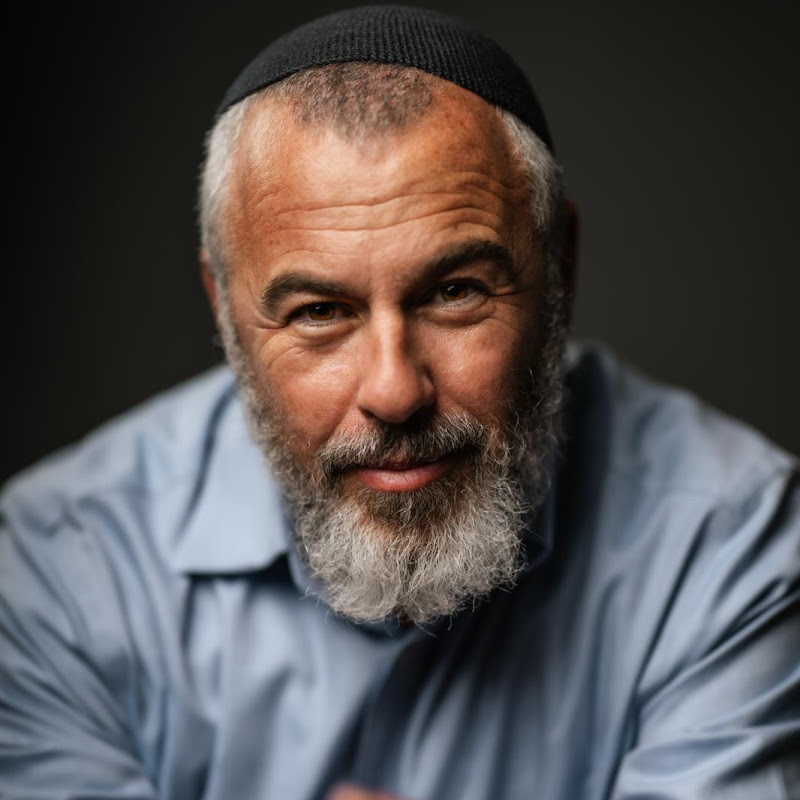
Transcript [00:00] Our guest is Dr. Morai Khedar, an [00:02] Israeli scholar of Arab culture, [00:04] political Islam, jihadism, Middle East [00:07] affairs. He served for 25 years in IDF [00:10] military intelligence and retired with [00:12] the rank of Lieutenant Colonel. He holds [00:13] a PhD in Arabic studies from Barilan [00:16] University. Dr. Kdar obviously speaks uh [00:18] Arabic and he's he speaks Arabic better [00:21] than most Arabs. [00:37] Dr. Kheddar, thank you so much for [00:40] joining us on the show today. [00:42] >> It's my pleasure, not to mention the [00:44] honor. [00:46] >> Okay, so the reason I I really wanted to [00:48] have you on the show today, we always [00:50] love having you, but but first let's [00:52] let's get a sense of of what's going on [00:54] around here. Um, [00:57] I guess the biggest picture that [00:58] everybody's concerned about is the [01:00] potential war with Iran. The United [01:03] States is moving in assets. The uh [01:06] Abraham Lincoln carrier group is is uh [01:09] in the region now. It it steamed over [01:12] here and and other assets are flying in. [01:15] Big jets uh are moving into various [01:18] bases including into Jordan. Uh and [01:20] there's definitely a kind of sense uh [01:23] that that something's going on. Some [01:25] airlines have canceled flights to [01:27] Israel. Um, and this is this is coming [01:31] after the two-week bloodletting in the [01:34] streets of Iran and the capital Tehran. [01:36] Uh, of w in which who knows how many [01:40] people were actually murdered. Okay, [01:41] let's watch together just a little sense [01:43] to get a little bit sense of of what it [01:46] felt like over there in Iran. [02:02] AFTER [02:21] OKAY. SO, Iran was in blackout so that [02:23] you wouldn't see these images and you [02:25] wouldn't see the shooting that people uh [02:28] face there. The regime shot its own [02:31] people. How many are dead? Maybe 20,000. [02:34] So, our first question to you, Dr. [02:36] Khadar, is what's the story in Iran? Is [02:39] there going to be uh are we preparing [02:41] for war with them? What are the Iranian [02:43] people feeling? Are they feeling [02:44] betrayed by President Trump? Are they [02:46] feeling that they died for nothing? Or [02:48] do they feel that this is the beginning [02:51] uh of revolution and the return of Iran [02:54] to the state that it was before the [02:56] Islamic Revolution? [02:58] >> Well, I wish there was a prophet to [03:00] answer your questions. The problem is [03:03] that I'm not and I'm human being and the [03:07] world today is actually run by one [03:10] person, [03:12] President Trump. And in my uh daily [03:15] conversation with him, I tried to ask [03:18] him what his plans about Iran are, and [03:21] he refused to tell me. Okay? They don't [03:25] speak to him every day. Uh, but what I'm [03:28] saying is that I think that nobody [03:32] I hope that Netanyahu knows what the [03:35] real what the real plans of Trump are. [03:40] What to do with this giant Armada which [03:43] is bringing to the southern sea and to [03:46] to the Arabian Sea or the Indian Ocean [03:52] uh towards Iran. Um, as much as I heard, [03:57] he's bringing two giant aircraft [04:00] carriers. Two, not one. A Lincolnland [04:03] and the other one Harry Truman, I think, [04:06] and an whole entourage of ships which [04:11] are actually floating [04:14] stoages of bombs, of missiles, [04:18] and of who knows what else. And this [04:22] Armada [04:23] uh can destroy Iran totally, can flatten [04:29] Iran with earth if they only want. And I [04:34] I I I'm not I I really don't know what [04:36] he's running. Maybe he will tell the [04:39] mullas in Iran, hey guys, you have 24 [04:43] hours to leave Iran, all of you, from [04:45] the first to the last. before I [04:50] kick the hell out of you. [04:52] >> But are the Iranian moolas like like the [04:54] Syrian Assad? I have heard that is IRCG [04:59] mid-level folks are are running away, [05:01] but like do you think that the Iranian [05:03] moolas are like are like Assad and that [05:06] they would leave and be like, "Okay, you [05:07] know, whatever. Just give us the money [05:08] and we're out of here." They don't seem [05:10] to be that kind. [05:12] Some of them will remain and will be [05:14] shared or we will be ready to be shared [05:17] means martyrs but many of them will run [05:21] away. How do I know in the previous [05:24] rounds of violence when they thought [05:27] that they are going to collapse [05:30] many of them smuggled suitcases but very [05:34] very heavy suitcases to Russia to China [05:38] to other places. You know why those [05:41] suitcases were very heavy? [05:44] Because of the metal which was in them [05:48] means gold. [05:50] These people have a lot to lose and they [05:54] don't want to lose it. M [05:56] >> so if Trump will give them the choice [05:59] between running away within 24 hours [06:03] >> 72 I don't know [06:05] >> or [06:06] uh face the consequences from under the [06:10] you know under the aisles [06:14] I I believe that many of them will run [06:18] away [06:19] >> when they that their regime is finished [06:22] by a power which nobody can [06:26] They might rely on the Chinese or the [06:28] Russians. I don't know. But and I really [06:32] don't know what what the Chinese will do [06:34] if there is such a threat. But let me [06:38] tell you something. the more credible [06:41] this threat will be, [06:43] the more the chances that Trump will not [06:47] be will not need to use it [06:51] because the more credible it is, the [06:54] more likely they will run away. [06:56] >> Tell me a little bit about the Iranian [06:58] people right now. Tell me tell me what [07:00] you know about the Iranian people right [07:01] now. We have to we we have to divide [07:04] sharply especially today between the [07:07] regime and its supporters which I [07:10] estimate at around 5% of the population [07:15] >> mainly those mainly those who are who [07:18] are the benefactors from the regime [07:22] those who get the money those who are [07:23] employed by the regime those who are in [07:25] the [07:27] IRGC means the revolutionary guard they [07:31] siege the the the the the police maybe [07:35] the army as well [07:37] ministries and and authorities which [07:39] belong to the country they are loyal to [07:42] the to the regime and I think that most [07:46] of the people who are not directly [07:49] benefiting from the regime like the [07:52] merchant in the in the bazar the [07:55] students the women you know in the [07:57] street the people who are walking [08:01] You know [08:03] these people suffered tremendously [08:06] because of the corruption which brought [08:10] the collapse of the currency which [08:13] brought the fact that they cannot even [08:15] buy food because the prices are [08:18] exorbited and they cannot pay [08:22] mainly because of the deterioration of [08:24] the value of the money. And whom whom do [08:27] they whom do you think they blame? They [08:30] blame the regime. They these people [08:32] don't don't blame Israel. The regime of [08:34] course blames Israel and United States [08:38] for undermining the the Iranian the [08:41] Iranian economy. Of course they will try [08:44] to blame the others. They will never [08:47] blame themselves because in their view [08:49] they are like the madi. They are msum [08:54] means infallible. [08:56] That's what they think about themselves [08:58] especially the mullas. So they are [09:02] totally detached from the people. The [09:04] the people they actually turned against [09:06] Islam [09:08] not because of the Islamic oppression. [09:11] They burned mosques. This is [09:15] unprecedented. when the people in the [09:16] street burnt hundreds of mosques all [09:19] over Iran during the last three weeks. [09:23] Women are running around without hair, [09:27] not with partially, totally without hair [09:30] veil. And um the people are [09:35] demonstrating with a with a former flag [09:38] with a lion on it which is against Islam [09:42] because you are not supposed to draw [09:45] animals in Islam. That's why they [09:48] changed the the flag from the animal [09:50] from the lion to Allah [09:54] in in the in the revol Islamic [09:56] revolution. So now people are running in [09:58] the streets with the old [10:02] Zoroastrian to say [10:05] flag and this actually shows how much [10:09] they are sick and tired of this regime [10:13] which imposed Islam on them. You know [10:16] the the mosques even those which are [10:19] functioning are empty [10:22] only handful of old people would go to [10:26] to to the mosque. The youngsters you [10:29] don't you don't see them in mosques. [10:32] The youngsters are [10:36] most of them are totally secular to a [10:40] degree that many of them deny Islam. [10:43] And uh there is the new movement in Iran [10:46] to go back to the Zoroastrianism [10:49] means the the religion which was before [10:54] Islam came to to Persia. So this is what [10:58] happens there. There is a giant gap [11:01] between the government and its [11:03] supporters on one side and most of the [11:08] of the people especially the Persians. [11:11] However, and here we have to add [11:14] um as much as people are against the [11:17] government and against the regime, there [11:20] are also in the minorities like the Arab [11:24] minorities and the Baluchi and the and [11:26] the Kurdish and the Ajani and the [11:29] Turkmans as well. Uh people who do not [11:34] want only to kick out the government or [11:38] the Müller regime. They want to get rid [11:42] of the state means the Iranian union [11:46] under the Persian operation. They want [11:49] independence for the Arabs and the Awaz [11:52] for the Kurdish people in K in the [11:56] eastern Kurdistan, the southern Azerai, [12:00] southern Tukmanistan and western [12:03] Baluchistan which are all part of the [12:06] Iranian land or Iranian state. [12:11] These minorities or at least many people [12:15] in these minorities want independence [12:19] want to break the state down as was [12:23] happened in the Soviet Union [12:26] which was divided according according to [12:28] ethnic lines. two stable states, [12:32] Kazakhstan Wasbakistan Tajikistan [12:34] Turkmanistan, [12:36] Aaran, [12:38] you know [12:40] this this what happened in Soviet Union. [12:42] The same thing happened in Yugoslavia, [12:45] >> right? [12:46] >> Today you have Croatia and Serbia and so [12:49] forth and Czechoslovakia as well. Those [12:52] pe those minorities in Iran, by the way, [12:55] the Persians are also minority. There's [12:57] no majority in Iran to any ethnic group. [13:01] Those minorities which are nonpersian [13:04] minorities [13:05] many of the people especially recently [13:08] they want totally independence just like [13:11] what happened in the Soviet Union. So, [13:14] so if the regime falls, is the regime [13:16] falls, the country falls apart or does [13:17] it hold together uh some kind of union? [13:20] Does Iran remain or does it become all [13:22] these you know a broken country or [13:25] broken up into smaller stands you know [13:28] or what you would call emirates maybe [13:31] >> states I don't see on the ground an [13:34] alternative [13:36] an alternative government w with force [13:39] with police with army with whatever in [13:42] order to maintain law and order most [13:44] probably the country will sink into an [13:48] allout war between everybody body and [13:50] everybody [13:52] >> it it might really turn into a real [13:55] house. It will be a real house let's say [13:58] for some weeks until maybe the sha dreza [14:04] will land in tan and will call everybody [14:08] to stop riots and stop the clashes and [14:13] to gather under his ages [14:18] and maybe many will not obey him [14:21] especially in the minorities which are [14:23] not Persian because they don't want him [14:26] just like they didn't want his father or [14:28] the moolas because they don't want the [14:30] Persians at all. They want independence [14:33] to the Arabs and the KS and all the [14:34] other minority ethnic minorities. [14:38] So it might work with the Persians. It [14:41] might not work with others. Um it will [14:44] take time and unfortunately lives of [14:47] people until the system will rebuild [14:52] itself or reshaped by somebody else [14:57] and until they will get their act [14:59] together to do something which I [15:02] wouldn't say everybody but most of the [15:04] people agree upon. It's more than clear [15:07] that they want to get rid of the mullas. [15:09] What's the alternative? I think that the [15:12] number of alternatives is more or less [15:14] the number of the people. Everyone [15:16] dreams about something else. [15:19] >> What's good for Israel? What's our dream [15:21] for Iran? That it remains a united thing [15:24] that that that that the I hear some [15:26] people say, "No, better to keep the [15:27] moolas, but just weaken them." uh or or [15:31] maybe uh we had here uh Ela Yosan. He [15:36] said that the Americans [15:39] uh don't want Iran to fall apart because [15:42] uh because they have signed a contract [15:44] for $130 billion with the Saudis to [15:47] supply them with weapons. So the [15:49] Americans aren't really interested in [15:50] the falling apart of Iran for economic [15:53] purposes. So like, okay, but we're here. [15:56] We're an Israelbased show. This is about [15:59] This is about Israel and and its [16:00] survival. That's what I'm trying to talk [16:02] about here. So, what's good what's good [16:04] for us? What eventuality do we want to [16:06] see? [16:08] >> First of all, if the Müller regime is [16:10] being removed, the world, not only [16:12] Israel, the world will be a better place [16:14] to live in [16:16] because all the money which they poured [16:19] on terrorism. Not only here, look at [16:22] Lebanon, a failing state only because of [16:24] the Iranians or the Iranian interference [16:28] between the the communities. Look at [16:30] Syria, what happened there as the result [16:33] of the fact that Assad was in the bosom [16:36] of the Iranians. Look at Iraq. Look at [16:39] Yemen with the Houthies supported by the [16:43] by the Iranians and many other places [16:47] which like South America which Iran is [16:50] sending its terrorists with this money [16:52] and the weapons and whatever they send. [16:54] So uh the world will be a better place [16:58] much calmer much more safe if the Müller [17:03] regime is being removed. Whoever would [17:06] will be there will be better from this [17:08] point of view because they mean the [17:10] mulas have this ideology [17:14] to deteriorate the situation in the west [17:18] to destroy the west because the west is [17:22] the threat on Islam according to what [17:25] they see because of the permissiveness [17:28] in the west because of the materialism [17:30] in the in the west because of the [17:32] glamour [17:34] atmosphere in the in the west and which [17:38] attracts the Muslim youth and therefore [17:42] they want to destroy the west and the it [17:46] is a question is who will destroy whom [17:49] will the west destroy them or they will [17:51] destroy the west there is no way of [17:54] coexistence between the mulas and the [17:56] west [17:58] >> okay so let's talk about a different [18:00] regime that has fallen something that [18:02] I'm sure is I [18:04] I'm I'm just like for a second like uh [18:07] you know I'm I'm sliding towards the [18:09] personal. It must be an amazing thing [18:11] for you to witness the Assad regime uh [18:14] fall. I'm sure that in your army career [18:17] and in your professional career. You've [18:19] been looking at the Assad regime and and [18:24] assessing its danger to us. I tell [18:26] people all the time that I remember when [18:28] I was in the paratroopers in the years [18:30] 95 and on. I remember we used to go to [18:32] the bathroom. There used to be these [18:34] posters that would say pasulit [18:38] here's how the the Syrians make their [18:41] tank formations and tank defenses. We'd [18:44] study these things in order to know how [18:46] to face this thing. So the the Syrian [18:48] regime, [18:50] it's not there anymore. And instead we [18:52] have this Golani regime. Now, now Golani [18:56] could have tried to just keep it quiet, [18:59] but in the meantime, he seems to be some [19:01] kind of butcher. And to correct me if [19:03] I'm wrong, he's already butchered the [19:05] he's fought with the Alawites, he's [19:07] fought with the Drews, and now the Kurds [19:09] are next. Let's take a little bit of a [19:11] video. Let's take a look at a video [19:13] about how Golani is dealing with the [19:14] Kurds right now. [19:36] Hello. [19:38] What's up? [20:02] those were captured as reportedly [20:05] captured Kurdish women uh in the hands [20:08] of Ashara Golani's uh forces and [20:12] basically there's been some kind of [20:14] fighting Kurds are running away uh and [20:17] women are being captured and caught. [20:20] Let's just watch a few more minutes [20:21] here. [20:35] Hello. [20:49] So, so ISIS uh fighters who were [20:52] imprisoned in Syria have now been let [20:55] free by the Syrian forces and probably [20:58] assume we can assume that they're [20:59] joining up with the Syrian forces. [21:01] Ashara Golani is a former ISIS guy. Uh [21:05] or maybe the word former is not correct. [21:08] Now they are freed out there to join the [21:11] forces. uh to continue their fight [21:14] against against everybody that's not [21:17] exactly them. So, okay. Um, Professor [21:20] Dr. Moredar, tell me a little bit about [21:23] Ashara Jolani. Tell me a little bit [21:25] about the Kurds. Go ahead. [21:26] >> First of all, Ash is his history, his [21:28] personal history is the ISIS and [21:31] al-Qaeda. He is today an ISIS with a [21:35] necktie and a jacket. [21:39] This is what Julani is. [21:41] >> Wait, wait, wait. He's he's with he's [21:43] with a necktie and a jacket and perfume [21:46] from Trump and he throws basketball with [21:49] American generals. He's not only is he [21:52] with a suit and tie, he's in the halls [21:55] of power in the White House, [21:57] >> right? [21:58] and his best friend which actually his [22:02] mentor Erdogan is the person who enabled [22:06] ISIS 10 years ago to become this [22:10] monster. Without Erdogan's support, ISIS [22:15] would not have been able to grow up to [22:18] such dimensions and to be so vicious. [22:22] All the volunteers which came to ISIS [22:27] came through Turkey. [22:29] Turkey bought oil from oil wells which [22:35] ISIS operated and this what gave ISIS [22:38] money. [22:40] uh Turkey enabled uh ISIS vehicles to [22:45] enter Turkey and to get back to Syria in [22:48] order to circumvent [22:50] the government's uh forces. [22:54] Uh Turkey [22:56] enabled ISIS people to bring money from [23:01] other places to ISIS to run ISIS. [23:04] Without Turkey, again, without Turkey, [23:07] ISIS would not have been as vicious as [23:09] it was, as tremendous as it was, and as [23:12] problematic as it was. And today, the [23:15] ISIS veteran Gulani with the ISIS [23:19] enabler Erdogan are dancing together [23:25] and and Trump gives them the music. [23:29] [laughter] [23:31] >> I mean, I mean, I'm laughing, but that's [23:33] because of my Russian side. We laugh at [23:34] dark situations, but I mean I mean [23:38] this regime has already I mean this is a [23:40] blood this is a bloodthirsty regime. Am [23:42] I right? Did I did I say correctly that [23:44] they attacked the Alawites, they [23:46] attacked the Jews, now they're attacking [23:47] the Kurds. Is that correct? [23:50] >> It's an understatement. [23:54] >> Go ahead. [23:56] Look for them once you are not one of us [24:00] means one of them whether you are a [24:02] Muslim or not you are you know you [24:06] should be executed [24:08] because only they have the right to live [24:12] and to rule and this is their crooked [24:16] mind you know 90 more than 90% of the [24:20] casualties of of ISIS were Muslims [24:23] people who pray people who go to to Hajj [24:26] people who fast on Ramadan [24:29] loyal Muslims but they were from [24:33] different sect or from different order [24:38] of from different group and they weren't [24:42] ISIS so they were slaughtered in many [24:45] cases and this is how um Sara thinks [24:51] about everybody especially infidels like [24:54] the Alawites or the Christians, Jews as [24:57] well and uh or even the Kurds which are [25:00] not Arabs. They are pure Muslims the [25:03] Kurds but both Erdogan hates them [25:06] because he's Turkish and uh and Golani [25:11] hates them because they are Kurds. So [25:14] here you are they are between the hammer [25:17] and the hard place. [25:19] >> Just give us another just another minute [25:21] about the Kurds. Uh I've spoken to many [25:24] older Jews who lived in Kurdish areas. [25:27] They always said to me that the Kurds [25:28] were always good to them. There's always [25:30] this sense that there is some kind of [25:32] alliance between Kurds and Israel. And [25:35] yet here's a people who seem to never [25:38] get together to get a state uh who seem [25:41] to be hated by everybody including [25:43] Turkey and Syria and Iran. They just [25:46] seem to be like what's what's the deal? [25:48] Why? Why? And on the other hand, they [25:50] also have this northern this Turkish [25:52] area in northern Iraq Kurdish autonomous [25:55] zone and it seems to be flourishing or [25:57] at least last time I checked it was [25:59] flourishing. Just give me a sense a [26:01] little bit about what it is to be [26:02] occurred. What is the deal? [26:03] >> First of all, the Kurds are a nation of [26:07] estimated 30 million people at least 30 [26:11] million. This is the biggest ethnic [26:13] group in the world which doesn't have a [26:16] state. So it's the the biggest [26:20] they are divided between Syria, Iraq, [26:24] Iran and Turkey [26:27] and oppressed in all the four [26:31] countries marginalized [26:34] by the central government which you know [26:36] the Turks and the Arabs and the and the [26:38] Iranians as well. They are suffering [26:41] tremendously the courts wherever they [26:43] live. However, they are divided. There [26:48] are many groups which belong to the [26:50] court of nation and they live far from [26:53] each other. You know pas live in Syria [26:56] live in Iran. It is far and because of [26:59] the distances they find it very very [27:03] difficult to speak to each other because [27:06] the dialects are different. [27:08] >> Wow. So the Cordish nation, although [27:11] they all speak Cordish, yet the dialects [27:14] are so distinct from each other that in [27:16] many cases they cannot even speak to [27:18] each other. By the way, in the Arab [27:19] world is the same situation. If somebody [27:22] with Iraqi Arabic, he cannot buy a [27:26] potato in in the market in in in [27:28] Morocco. [27:30] Nobody will understand what he wants. [27:32] And vice versa, a Moroccan who will find [27:34] himself in a market. [27:35] >> Yeah. The difference is the difference [27:36] is is that the Arabs have countries. [27:38] They have countries that they live in [27:39] that protect them and and then okay, but [27:42] the Kurds they they are always living [27:43] amongst other people. They're always [27:45] they're always being persecuted and they [27:47] have no they have no peace, it seems, [27:49] >> right? because they did not invest time [27:54] and effort in London in the beginning of [27:57] the 20th century where the world was [28:00] shaped especially after the collapse of [28:02] the of the Ottoman Empire in 1917. [28:06] Uh they were not in London to make sure [28:09] that their interests are being taken in [28:11] account. [28:12] >> The Zionist movement of the contrary had [28:14] a very very strong presence in London in [28:18] those days. Of course, it was [28:20] criticized, but it was essential to the [28:23] state. [28:24] >> And not only this, as you might know, [28:27] pilots from the RAF, Royal Air Force, [28:30] actually served in the IDF air force [28:34] until, [28:35] you know, Israelis [28:37] could replace them. So, this is what [28:40] what I mean. The the Zionist movement [28:43] worked in the international arena in [28:47] order to be acceptable. Look the since [28:49] the bal declaration 1917 [28:52] decision in 1920 and all the decisions [28:55] of the United Nations after 1945 and [29:00] before and by the league of nations. [29:03] The Zionist movement was very active [29:05] through the years with those countries [29:08] and people who influenced the [29:11] international community. The Kurdish [29:14] people did not invest anything. [29:17] They didn't have delegation. They didn't [29:19] have an organization. First of all, [29:21] because they cannot agree on with each [29:23] other. Start with this. Secondly, [29:26] because of their uh distances between [29:28] themselves. So every group thinks by [29:31] itself for itself without taking in [29:34] account the whole the whole [29:37] nation. And this is why we always see [29:41] and I I myself remember all kinds of [29:44] settlements between the central regime [29:48] in Syria and Iraq by the way with the [29:50] Kurdish minorities in Syria and Iraq. [29:54] Yet the the Kurdish usually were with [29:59] the lower hand because they didn't [30:02] really know how to negotiate. Didn't [30:04] know how to to to phrase things in [30:07] English. So nobody really took them [30:09] seriously. Unfortunately, this is the [30:11] name of the game today. [30:13] >> Dr. Morai Khedar, okay, we we we've [30:15] talked about Iran, we've talked about [30:18] Syria. I'm just asking you now as a [30:20] person who's got his finger on the [30:22] pulse. In the end, intelligence, right, [30:24] is not just an assessment of [30:27] information. It's not just a gathering [30:29] information. It's an assessment of of of [30:32] intent and atmospheric. What's the [30:35] atmospheric right now in the Middle [30:36] East? What? What's By the way, just a a [30:39] quick uh deeper thought on that. I I I [30:42] met a rabbi, Rabbi Yakov Wolf, who told [30:44] me that the reason that prophets write [30:47] history is because Ravk Cook says that [30:50] it's hard to know what the central theme [30:52] of the time is. What is the major what [30:55] is the what is the river that's really [30:56] running? You think you're you you think [30:58] you know what's going on, but you're in [30:59] a silo. I'm asking you what's going on. [31:02] What's going on right now? Like [31:03] >> the phone. Close the phone. Everybody in [31:07] the Middle East holds its breath [31:12] waiting for what Trump will do if he [31:17] does [31:18] to Iran. [31:21] based on the clips which you showed and [31:22] many others, based on the numbers of [31:26] people who got killed uh during the last [31:28] month in Iran, based on the military [31:34] power which America will collect [31:38] next to Iran and the collateral de [31:42] collateral damage which might be caused [31:46] to some friendly countries because of [31:50] this attack like Israel, like Saudi [31:53] Arabia Emirates Bahrain okay they [31:57] are shaking and shivering because of [32:00] this possibility that they will be hit [32:04] by Iran as some kind of revenge. And the [32:07] Saudis remember very well what happened [32:09] at 4 in the morning of the September 14, [32:14] 19 at 2019. [32:20] 4:00 in the morning of September [32:23] September [32:25] uh uh 14 [32:29] uh 2019 [32:31] and that morning early morning Iran [32:34] attacked [32:36] Aramco facilities, two Aramco facilities [32:39] in Saudi Arabia, one in Abkik and one in [32:44] destroyed them totally [32:45] >> with the drones. It was a drone attack, [32:47] right? drones and missiles [32:50] which surprised [32:53] overwhelmed the Saudis and the Saud [32:56] until this very day did not forget and [32:59] they behave because otherwise Iran is [33:02] too close for them to hide. [33:06] Okay, so that's one thing. Second thing [33:09] what we see to means the Trump [33:11] intentions visa Iran [33:14] this is something which everybody in the [33:17] Middle East is trying to find out. [33:21] Second thing is uh what will be in Iran [33:25] if [33:27] Trump [33:29] attacks Iran? Will the regime collapse [33:32] or not? how many people will be killed [33:34] in the streets in order to convince the [33:38] people in the government or the the [33:40] regime to to run away. So this is the [33:44] the unknown about Iran is too big and [33:48] people are you know they they told me [33:53] you know many of my people who know me [33:56] is it safe to buy a flight for Saturday [34:01] two days from today or Sunday three days [34:04] what do you think go to so I say to [34:07] everybody the same thing I don't know [34:10] this is something which President up [34:13] doesn't tell me every day. So, [34:16] so this is the situation. Uh the second [34:20] thing or another thing which uh concerns [34:24] people in the Middle East [34:26] is what will happen with Gaza. People [34:30] want to see the end to this agony. It [34:32] it's too long, two years, too bloody. [34:36] Not that they love the Palestinians so [34:37] much but uh definitely uh here there is [34:42] something some agony of people real [34:44] people you know women children who are [34:47] really suffering nobody claim that they [34:49] are not suffering so yeah people do not [34:52] want to see you know they they would see [34:56] but but they don't want to know that [34:58] there are people who are suffering in [35:00] such a way for more than two years in in [35:02] in Gaza they really people [35:05] an end to this thing. The third thing [35:08] which today is news in the Middle East [35:12] is the str [35:14] between Saudi Arabia and the Emirates. [35:20] These two countries or two entities and [35:23] emirates, the Gulf Emirates were [35:27] supposed to live in peace with each [35:28] other and to cooperate, you know, for [35:32] the good of everybody. And this what [35:35] they were supposed to do. However, [35:38] because of unknown reasons, [35:41] Saudi Arabia started to attack the [35:42] Emirates and to blame them for [35:45] normalizing the relations with Israel. [35:49] And to what? And to what? And and to and [35:51] to what about Israel? [35:52] >> They blame. [35:54] >> Oh, blame them. Okay. Uhhuh. [35:56] >> Blame Emiratis. This is something which [35:58] and not only this Muhammad bin Salman, [36:03] the actual leader of leader of of Saudi [36:07] Arabia. He connects himself with the [36:09] Muslim brotherhood [36:11] which is totally against all the [36:14] theories which know very well that the [36:18] Muslim motherhood is it's an [36:20] organization which came out from from [36:23] from Islam and and nobody really thinks [36:28] that it says [36:30] >> I thought I thought everything about [36:32] this guy Muhammad bin Salman has been [36:34] turned on its head for me. First, I [36:36] thought he was strong, then then [36:37] explained to me that he's actually weak. [36:39] Uh, I thought he was going to be a [36:40] reformer. Now, he's turning back to [36:42] jihadist roots. You know, I was I was [36:45] looking towards a new Middle East. [36:46] Abraham Accords, they give remember when [36:48] they gave us the flyover rights over [36:50] Saudi Arabia. I was excited about that. [36:52] But it's [36:54] >> Yeah, but it's going away now. Okay. But [36:56] it's But the atmosphere is going away [36:58] now. the atmosphere of [37:00] >> and and and today Saudi Arabia sides [37:03] with Turkey, sides with the Muslim [37:05] Brotherhood, sides with [37:09] with Iran in many cases. Saudi Arabia is [37:14] today is not familiar to many [37:17] researchers which took things like the [37:20] tension between Saudi Arabia and the [37:23] Muslim Brotherhood as some kind of [37:25] given. But when you say Saudi Arabia, do [37:27] you mean Saudi Arabia or do you mean [37:30] Muhammad bin Salman? Like maybe there's [37:32] a, you know, the great man's theory of [37:34] history. Maybe we're not talking about a [37:36] country. We're talking about a dude, [37:38] right? And just like you said in the [37:39] beginning of the broadcast, the [37:40] interview, you said that that it's about [37:42] Trump. He's he's he's deciding. Of [37:44] course, we know, by the way, that it's [37:45] that it's God that really decides. But [37:47] but I'm I'm asking you like, is it is it [37:49] this man? Is he u uh as we say in [37:53] Hebrew, he he changes his mind often. Is [37:56] that the issue? Who is this guy Muhammad [38:00] ben Salman? What's his problem? [38:01] >> No, no, no. He first of all, he has [38:05] domestic problems. [38:08] Many in Saudi Arabia think that he was [38:10] not supposed to be the next king because [38:14] there are his cousins the the sons of [38:18] the former kings [38:21] those who were reigning this country [38:23] before [38:26] and others and they they have al also [38:30] sons who are who are older than Muhammad [38:35] bin Salman who are much more experienced [38:39] and much more capable to understand. [38:43] That's at least what they think. So why [38:46] should Muhammad Salman be the successor? [38:50] And the question of su succession is [38:52] today the most agonizing [38:57] point on agonizing issue in Saudi [39:00] Arabia. [39:01] >> Dr. Khedar, your your sikum your overall [39:04] outlook for the Middle East right now. [39:05] Oh, and and we and we forgot to mention [39:07] the Kurds, the Drews, Alawites of Syria [39:11] who are who are embattled right now [39:13] facing this jihadist regime which has [39:16] the support of the Trump administration. [39:19] Look, what I say now is valid to now [39:24] because in an hour things can be [39:26] dramatically [39:28] altered. [39:30] Let alone day, two or three days. And we [39:33] are living in such a a a period in in [39:36] history which major events on the global [39:41] stage [39:43] are in doubt. [39:45] But there are people who plan them and [39:47] there are people who are are not sure at [39:49] all if these events will take place [39:52] really. [39:54] So this is definitely a period of time [39:57] which the world never experienced. [40:01] The world never experienced such a such [40:03] a situation. We don't know what will be [40:06] tomorrow in Iran. Will the Iranian [40:09] regime remain or not? Let's hope that [40:11] these steps which Tom plans will not [40:15] destroy the world. [40:19] >> Indeed. Indeed. So you're talking about [40:21] really the the English word for what [40:23] you're describing is volatility. It's [40:24] it's a very volatile time right now in [40:27] the Middle East. [40:28] >> Dr. Morai Khedar, you'll be on speaking [40:30] tour in Florida uh in a few weeks. I [40:34] might be there as well. Uh people should [40:36] definitely uh follow you uh and get to [40:39] your lectures, your aerodite lectures [40:41] there. Uh and thank you so much for [40:43] joining us here today. [40:44] >> Thank you so much. to win.