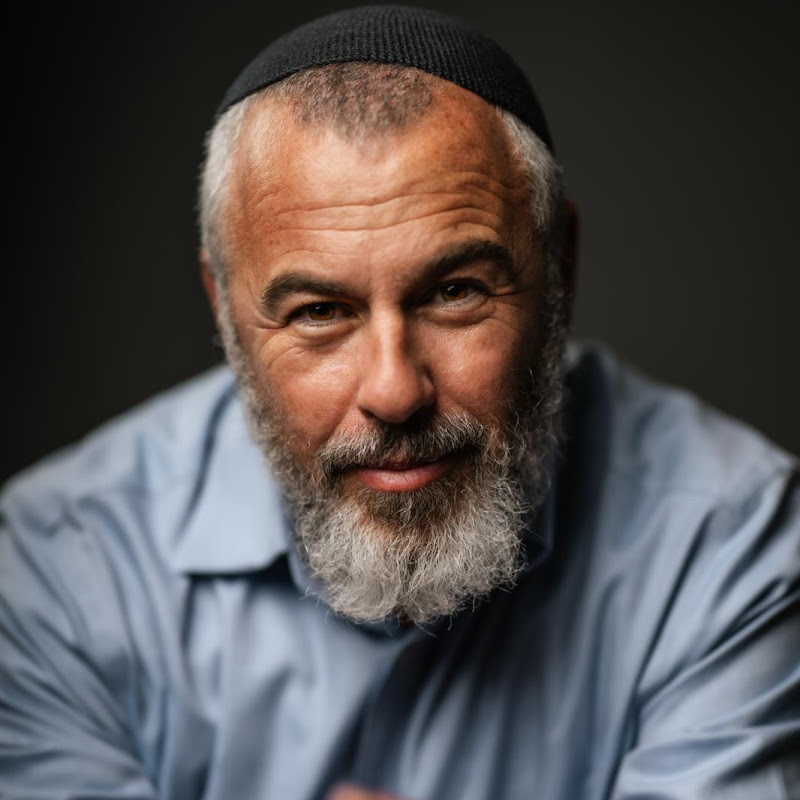
Transcript [00:00] All right, folks. Esher here. I'm with [00:02] one of the world's most famous farmers, [00:04] certainly one of the most famous farmers [00:05] in the United States. His name is Joel [00:06] Salatin. He's an author of many books. [00:08] He's been featured uh on a lot of movies [00:11] about food, about agriculture. Uh he is [00:15] uh famous for pasture-based farming. Am [00:18] I right? Is that the right way to do it? [00:19] Local food systems, food freedom. Food [00:22] freedom. That sounds like so American, [00:24] right? Food freedom. Well, Mr. Joel Joel [00:27] Salatin. So, this is the second time [00:29] you're here in the land of Israel. Uh, [00:31] both times you've come with the [00:32] Hyovville organization. Uh, and you've [00:35] given talks about farming. You're a busy [00:38] guy. You've got a farm. What are you Why [00:39] are you coming to Israel? And why are [00:42] you giving talks about farming here? Not [00:43] only to regular farms, but to hilltop [00:46] farms. What's that all about? [00:48] >> Well, it's all about u number one, I [00:50] love Israel. [00:52] And number two, uh it is to see it is to [00:57] uh try to see if we can move the [01:02] the prophecies of of a flourishing [01:04] vibrant land. I've traveled all over the [01:07] world and I don't know when I've been in [01:10] a more desolate looking place for [01:13] farming. I mean, the rocks, the dry, the [01:15] the bedrock. I mean, it's just and and [01:18] on our farm in Virginia, we came after I [01:22] mean, this has had thousands of years of [01:24] exploitation. We came after only 150 [01:27] years to our neck of the woods in [01:30] Virginia of 150 years of European [01:32] exploitation. And we know that it lost [01:35] somewhere between 3 and 5 feet or or you [01:38] know a meter and a half of top soil in [01:42] 150 years with plowing and um incorrect [01:46] work. So when we came to our farm, we [01:49] had large areas that were solid rock, [01:51] bedrock, just like here. And over my [01:54] lifetime in 65 years, I mean I'm older [01:57] than that, but I mean we've been there [01:58] for 65 years. Um, I've seen this bedrock [02:03] grow about 12 to 14 inches of soil on [02:05] it. And um, and so I know I know that we [02:09] can grow soil. I know that we can heal. [02:11] We can redeem the landscape. And so it's [02:14] partly to be a partner in the [02:18] accomplishment of those prophecies of [02:21] rivers flowing and the abundance and the [02:24] the flourishing of the of the nation. uh [02:27] to fulfill those prophecies that um that [02:31] I come to encourage, inspire, and um [02:35] help farmers fulfill those prophecies. I [02:38] I got to tell you that what you just [02:40] said was very moving to me. [02:43] >> Um because [02:46] I love the idea of making it happen. And [02:49] you're talking about regeneration of [02:51] soil. You're talking about making [02:53] something flourish again. That's the [02:55] language of the rebirth of Israel. [02:57] Absolutely. Read Zechariah. It's it's [02:59] all through there. And I've I've had the [03:02] privilege of being places around the [03:04] world where um where that kind of [03:07] success has been accomplished. I mean, [03:09] not only on our own farm, but uh on [03:12] other places. I mean, I was in a a place [03:14] in uh Arizona, which is a desert. And um [03:19] and I I saw a ranch there that had done [03:22] these principles uh with water [03:24] management and carbon and organic matter [03:26] and all that. And uh and in in a few [03:31] years, short years, I mean like less [03:33] than 10 years, um several springs began [03:37] running that hadn't run for 50 years and [03:40] and uh grasses germinated. And uh and so [03:44] we've seen that same level of of uh of [03:49] work at our place. And it's not just [03:51] soil, water. It's um we just we just [03:54] participated in a um in a working a [03:58] Smith a Smithsonian sponsored working [04:00] landscape study where uh I think I'm [04:03] right on this. We were the only place in [04:05] Virginia where they found all eight [04:07] bumblebee uh types uh that are known to [04:10] exist in Virginia. you know, they exist [04:12] other places, but we're the only place [04:14] where all eight of them and you know, [04:17] pollinators, that kind of thing, that is [04:19] an indicator of a uh of a flourishing of [04:23] life. And um few things excite me more [04:26] than seeing somebody come to the farm. [04:29] Uh we view the farm as an object lesson [04:32] of spiritual truth. So, we want people [04:34] to leave the farm and say to each other, [04:36] "Oh, that's what mercy looks like. Oh, [04:39] that's what redemption looks like. Oh, [04:41] that's what that's what provision looks [04:43] like. And um and I've been so blessed to [04:46] be a part of that, a participant of that [04:49] of of literally um Yahweh's hands and [04:53] feet, you know, to to to he could use [04:56] angels. He could use cherubims. He could [04:59] use the voice of his power, but he chose [05:01] us to be his hands and his feet to touch [05:05] and and and and touch this creation [05:08] object lesson of his spirit of of his [05:10] divine uh uh provenence and abundance to [05:16] us. And so if I can touch my my Israeli [05:22] brethren with that with that concept [05:25] first of all the concept that yes we can [05:28] do this and b then how to do it and move [05:31] it forward uh that will be a that will [05:34] be a great a great u addition to the to [05:38] the overall healing of the nations. you [05:40] know, we have a concept of the [05:41] resurrection of the dead. Um, and [05:45] certainly that's an important Christian [05:46] concept as well, but like I always tell [05:49] my kids that resurrection is much more [05:50] than that. The it's it's every time I [05:53] tell them when you get new shoes, you [05:55] just got a new skin on your feet. You're [05:57] now you have you have a new life for [05:58] your feet. Uh when you have a new job, [06:00] new opportunities, new people that you [06:02] meet, there's like a a rebirth, you [06:04] know, a renewal. Uh, I don't want to get [06:06] theologically down in problems here. So, [06:08] but I'm just saying a kind of, you know, [06:10] that's what you're doing. You're [06:10] bringing the knowledge of exactly what [06:12] we're doing, which is a kind of [06:14] resurrection, a kind of rebirth of this [06:16] land. Well, that's the whole idea is [06:18] that that [06:21] things that are the I the idea of [06:24] rebirth and regeneration [06:26] uh which has now become a catch word in [06:28] agriculture, regenerative egg, uh, is [06:30] really a [06:31] >> regenerative egg. [06:32] >> Regenerative egg. That's the kind of the [06:34] new buzzword. But what what it but in [06:36] order for something to regenerate, it [06:38] has to have been dead. [06:41] >> And so people don't talk about the dead [06:43] part, but the fact is um there is a lot [06:46] of death, destruction, and dysfunction [06:49] in the world. And um and and we as God's [06:56] uh emissaries [06:58] are to be participants. [07:01] Our our calling is to be participants in [07:05] that in that uh engagement [07:09] with the the healing, the regeneration, [07:12] the resurrection, the new life that [07:14] comes uh when when divine principles are [07:18] instituted in life [07:21] >> and on the landscape. You're you're [07:23] talking my language, you know, you're [07:25] just talking a little bit better than I [07:26] would, but but that's exactly what I'm [07:28] involved in, which is rebuilding. In [07:30] fact, one of the things that I dream [07:32] about at night is rebuilding Hebrron and [07:34] making it alive again. And I gave you a [07:36] talk and again I want to thank the the [07:38] Cowboys and the Israel guys and Hayov [07:40] for bringing you out here. And not only [07:42] by the way did you come here to tour. [07:44] You actually came to teach. Yeah. [07:46] >> Right. You came to teach. We'll get back [07:47] to that in a second. But you came to [07:49] Hebrron. One of the arguments that I [07:51] made to you is that our enemies want to [07:55] make Israel seem like an outsider, a [07:57] foreigner, and something very uh [08:00] inorganic. And my argument is actually [08:02] that Israel is the one word that says it [08:05] all is organic. [08:07] >> It's it's a it's a nation back on its [08:10] land. the language, the names, the DNA, [08:13] the Torah, the places, the children, the [08:17] the tomb of the forefathers and mothers [08:19] here in Hebron behind me where we get to [08:21] say we saw children and soldiers [08:23] frolicking next to this tomb today. Uh [08:26] it's all one. And of course, the heaven [08:27] he heaven above, it's all a oneness. Uh [08:30] and I thought to myself, well, there's [08:31] nobody who's going to understand that [08:32] word organic more than you. uh uh [08:34] because because there's a difference [08:35] between a person who says it, who buys [08:37] it in the supermarket, and a person who [08:38] knows what the roots smell like and and [08:40] what it all feels like. So, what do you [08:42] what's your comment on the word organic? [08:44] Well, organic organic speaks to [08:46] authenticity [08:48] and uh and as a in in farming in as the [08:52] word was applied in farming, it was it [08:55] was to differentiate between natural [08:58] principles and artificiality. [09:00] artificiality being chemical [09:02] fertilizers, chemical pesticides, and of [09:05] course in our food, you know, all the [09:07] unpronouncable ingredients in in in food [09:10] these days. [09:10] >> And I think I just saw an article today [09:12] that a lot of this is is bringing a a [09:14] great uh health uh crisis in the United [09:17] States. [09:18] >> Well, yeah, the United States uh you [09:20] know, invented DDT. It invented uh many [09:22] of these things, genetically modified [09:25] organisms and different things. And [09:26] there's a reason why the United States [09:28] is now the sickest country uh in the in [09:31] the developed world. Uh because we [09:33] invented these artificialities. You [09:35] know, Sir Albert Howard said in u in [09:38] 1940, [09:39] he said when we when we use artificials [09:43] to u into the soil, it grows artificial [09:47] plants which makes artificial animals [09:50] which then makes artificial people who [09:52] can only be kept alive with artificials. [09:54] That was before the big pharmaceutical [09:56] industry was in. If he was writing [09:57] today, he would have said [09:58] pharmaceuticals. But artificials is good [10:00] enough. One of the reasons we don't use [10:02] chemical fertilizers uh for for for [10:05] physical reasons, but also spiritually [10:09] the chemical fertilizer concept says we [10:11] can grow things without something dying. [10:14] And the fact is [10:16] >> until there's a sacrifice, [10:18] >> there can't be life. Life requires a [10:21] sacrifice. Everything everything is [10:23] eating and being eaten. So when I talk [10:25] to little children, I say, "Hey, you [10:26] want to flourish in life, [10:28] >> you die to self. You sacrifice yourself. [10:31] You and that's the way you flourish." [10:33] And and and so everything we've done in [10:36] in chemical agriculture, industrial [10:39] chemical agriculture, is to uh is to [10:44] >> uh reduce this this consistent thread, [10:49] as you said, organic. this organic [10:51] consistent thread that runs spirit, [10:54] physical, um our life here, the life [10:58] hereafter, and and it all it all runs uh [11:02] in a very consistent pattern right [11:04] through. [11:05] >> I never thought about the death element [11:08] as being like a life-giving thing. Uh I [11:10] never thought of it that way. And that's [11:11] I'm going to have to think about that. [11:13] >> Well, in order for you and I to live, we [11:15] have to eat something, [11:16] >> right? And and I mean now we know even [11:19] carrots talk to each other. Uh acacia [11:21] leaves talk to each other. So the truth [11:23] is that the that the cosmos is pulsing [11:26] with sentience with with that's the [11:29] difference. [11:29] >> What does that word mean? [11:30] >> Sentience with with um with [11:32] communicative understanding. In other [11:33] words, with responsiveness. Okay. Uh we [11:36] know now that that that a a garden [11:39] responds better to for example classical [11:42] music than it does to hard rock. I mean, [11:45] those studies have been experimented. [11:46] Uh, water crystals, water crystals even [11:49] respond to um to I don't want to get all [11:52] woo woo and weird on you, but but but I [11:55] mean, but but this is fearfully and [11:57] wonderfully made. It's not just [11:58] nitrogen, potassium, and phosphorus. [12:00] It's not just grow it faster, fatter, [12:02] bigger, cheaper. Uh what we want is a [12:04] farm that honors the cowess of the cow, [12:07] the chickenness of the chicken because [12:09] it's it's in honoring the cowness of the [12:11] cow that we create an ethical moral [12:14] framework to honor the yeshness of yes, [12:17] you know, the the marion miriamness of [12:19] marryiamness. You can't have an honored [12:22] citizenry when you dishonor all the life [12:25] sustenance that goes into it. So, you [12:27] know, th this is all wrapped up in a in [12:30] a consistent uh not only a consistent [12:33] theology but a consistent philosophy [12:36] that was that was ripped apart by St. [12:40] Augustine and the Greek Roman idea of of [12:44] segregating and compartmentalizing [12:47] thought. It's it's all holy. [12:50] Um, [12:52] one of the things that I do sometimes [12:54] when I walk into a room or when I'm in a [12:56] a room of prayer, um, is I or let's say [12:58] at a conference, I do a little [13:00] meditation with myself. I say, "Let my [13:03] mind commune with all the other minds [13:05] here. [13:06] >> Let let us have a and and and I'm also a [13:09] a um uh a city councilman." [13:12] >> Yeah. [13:13] >> And when I get into these meetings, I [13:14] just go, "Let me let me hear the other [13:17] minds. let my mind be in their minds. [13:20] Let us have a communication that's not [13:21] with even with with words. [13:23] >> Um and I've also heard that that that uh [13:26] intelligence is today measured [13:28] generationally. [13:29] >> Mhm. Meaning to say what is the [13:31] intelligence of a generation? What's the [13:32] communication? We've had a lot of uh [13:34] we've had a lot of stuff right now that [13:36] is throwing that off. If it's Tik Tok [13:38] and other things, there's been a lot of [13:39] anti-Israel stuff and there's a lot of [13:42] messaging right now which has distanced [13:43] the United States from Israel just in [13:46] the last few months. Yeah, [13:47] >> it's really, you know, if we were [13:49] talking about biologically, it's a it's [13:51] a disease or a um what do you call it [13:53] when there's a growth on a tree, [13:55] >> it's a cancer. It's a it's an abscess. [13:57] It's a it's a you know, it's a scab. Um [14:01] yeah, that's right. And and it's it's a [14:04] it's a it's a scab of thinking. Uh it's [14:07] a cancer of thinking. And um yeah, it's [14:10] not it's it's not healthy. And and you [14:13] know, God created this. He said it's [14:15] good. is very in fact he said it's very [14:17] good. And so when um so when we see you [14:23] know dysfunction, disease, sickness, we [14:26] we view it as a you know as a [14:29] manifestation [14:31] of um of of something that is out of [14:35] whack or out of balance or out of [14:37] thought, you know, whatever whatever you [14:39] see um in it. you know, we we have [14:43] thousands of animals and we just we just [14:45] don't have a vet bill. I mean, we just [14:46] it's not that we never, you know, you [14:48] never lose a if you're gonna have a [14:49] thousand chickens, you're probably going [14:50] to lose one. All right? But but there's [14:52] not an economic thing and we don't sit [14:54] around in fear about, you know, bird flu [14:56] or open mouth disease or, you know, uh [15:00] these these other things. We don't sit [15:01] around in fear of this because by faith [15:05] by faith we say God's patterns work. [15:09] And if we adhere to those patterns, [15:13] it'll be healthy. Which, you know, I [15:15] can't I I can't let that go without [15:18] pointing out that Israel has a little [15:21] bit of growth to go in this area in that [15:24] >> and I don't mind on this show, on the [15:26] East Flasher show, we are okay with [15:28] loving criticism. Okay? We we are and [15:31] we're not okay with a kind of hubris [15:33] that says that we know everything. We [15:35] don't. [15:36] >> And we want to learn from people like [15:37] you. And that's why I'm so thankful [15:39] again to Hayov uh and and to the Israel [15:42] guys for bringing you here to teach. I [15:44] love that. I love that. And I've also [15:46] heard that the farmers were very [15:48] interested. They were listening and they [15:50] were already sending you videos saying [15:52] like, "We've really we're trying to [15:53] master these things and and put them [15:54] into practice." [15:55] >> Yeah. So, I just learned on this trip uh [15:58] the other day. So there's um there [16:01] there's a apparently there's quite a a a [16:05] regulatory prohibition on chickens [16:08] outside, chickens on pasture. [16:10] >> Well, so so [16:11] >> I did not know that. [16:12] >> In the in the two seminars we've done, [16:14] I've asked for the farmers in the [16:16] audience, if you were a chicken, [16:18] >> what what would you like? Well, you [16:20] know, I'd like fresh air, sunshine, be [16:22] able to scratch, use my feet, bugs, you [16:25] know, I mean, you've got this. And I [16:27] say, "So, how many how many chickens [16:30] enjoy this in a in a conventional, you [16:34] know, approved factory farm?" Well, [16:37] none. And and so so this is the problem. [16:39] >> You don't you don't have happy chickens [16:41] then. [16:41] >> You don't have happy chickens. [16:42] >> And then you don't have happy meat or [16:43] happy eggs. [16:44] >> And and and I suggest that the cortisol [16:47] the cortisol from adrenaline drips. Um [16:50] we've seen it in our own experience. our [16:52] meat at our farm. We service a lot of [16:55] white tablecloth restaurants and we've [16:57] learned that all of our meats cook 15% [16:59] faster than than industrial and it's [17:03] because the animals are never stressed. [17:04] They're you tighten up when you're when [17:06] you're stressed. [17:06] >> Wow. [17:07] >> And and the other thing that's happen so [17:09] then I said, "Well, why is this in [17:11] Israel? Why do they have such a such an [17:13] antipathy uh toward, you know, chickens [17:16] outside?" Well, it's because there's [17:18] this thinking that if if manure touches [17:20] the ground, um it it might go into a [17:23] stream and and pollute a stream. So then [17:25] I said, 'Well, all these big chicken [17:27] factories, where does all that manure [17:29] goes? [17:31] They feed it to cows. They feed the [17:34] chicken manure TO COWS. I MEAN THAT'S a [17:36] complete opposition and inversion of [17:39] natural pattern not only to feed cows [17:41] chicken manure but in nature birds [17:43] follow herbivores not herbivores [17:45] following um her uh birds and and so um [17:50] so there's you know there's there's [17:52] there's work to do here uh and of course [17:55] >> in terms of policy as well [17:56] >> in terms of policy and un here's if if [18:00] you could just stand a moment of [18:02] analysis. No, I can. We we we app that's [18:04] what's so fun about you is because [18:06] you're talking spirituality, but you're [18:07] backing it up with science, with with [18:09] with with experience, with real, you [18:12] know, farming. So So I do appreciate [18:13] that. [18:14] >> Yeah. So So what's happened here in [18:16] Israel, I've learned that [18:20] that unlike almost every other country [18:23] in the world, there is not a deep [18:26] Israeli agricultural anchor here uh [18:30] experience. [18:31] All the farmers here are just first [18:34] generation in and the first generation [18:37] farmers I mean from 1948 came not as [18:40] farmers um Jews didn't own land they [18:44] were they were you know uh gemstone [18:47] cutters they were clock makers they were [18:50] they they had tools of the trade they [18:52] could throw in a bag so they could flee [18:54] somewhere they didn't buy land and [18:56] settle land you know in places and so [18:59] when the nation was founded And it's [19:01] it's a very obviously a very young [19:02] nation. Um that [19:04] >> reborn [19:05] >> reborn. Yeah. Very Yeah. Reborn nation. [19:07] Um uh regenerated nation. Uh [19:11] >> we died a little bit. [19:11] >> Yeah. You you died. That's right. You [19:13] died. And it's it's wonderful to see the [19:15] you know to see the coming out. Um so so [19:18] what happened what what what happened [19:21] then was that the farmers the the folks [19:25] who said put their hands up said yes [19:26] I'll farm didn't have grandfathers and [19:30] great-grandfather they didn't have a [19:31] farming tradition in their background. [19:33] Well where where did they look? They [19:35] look to their friend America, the US, [19:38] which which leads the world in an in an [19:43] in an anti-ecology, [19:46] anti-nutrition. I mean, we invented uh [19:49] you know, Coca-Cola, potato chips. I [19:51] mean, you know, we we invented all this [19:52] TV dinners and so uh you know, velvet [19:55] squeezable Velvita cheese and um and so [20:00] a as well as factory farming, you know, [20:02] uh industrial farming and industrial [20:04] chemicalization. And so as these as [20:07] these farmers looked for a coach, the US [20:11] became the coach. And so Israel has [20:15] pretty much in agriculture adopted [20:19] American agriculture which which [20:23] we which I know and people like me know [20:27] is the fastest way to [20:31] lose soil, destroy nutrition, and [20:35] actually destroy the health of the [20:36] people. And so, um, I'm here, one of one [20:41] of the things I'm trying to do is bring [20:44] this this circle of understanding. [20:48] You're as healthy as what you eat. What [20:50] you eat eats, and what you eat eats the [20:52] soil that grew, the plant that fed the [20:55] what you eat eats. Uh it it's it's this [20:57] it's this circle to bring that [20:59] understanding to folks so that um so [21:02] that Israel can can um can can detour [21:08] from this [21:10] love of tech uh uh space yesterday. I [21:13] was I was with these sheep farmers and [21:15] um and so we have sheep and we lamb once [21:19] a year with no grain. They the lambs [21:22] finish on grass uh which makes the [21:24] highest you know riboplavin and vitamins [21:27] and all that rather than grain. And um [21:30] and here they told me the goal is three [21:35] three lammings every two years. [21:37] >> Sorry. What's a lamming exactly? [21:39] >> When a you lambs when she has babies [21:41] lamming. Okay. [21:42] >> And um and so we lamb once a year which [21:45] is the natural pattern. You know, deer [21:47] have fawns once a year and those sheep [21:50] can last a long time. Uh though deer, [21:52] you know, they stay healthy a long time. [21:54] You know, you don't see veterinarians [21:56] going out and taking care of deer [21:57] problems. Well, um the the the the [22:01] problem is here there are all sorts of [22:03] sheep diseases [22:05] that are here because the farmers are [22:08] trying to squeeze [22:12] um a lamb every 8 months and it doesn't [22:16] let the U recuperate. [22:18] And so here there are a lot of diseases [22:21] in the sheep, huge diseases in sheep and [22:24] a lot of mortality, a lot of uh a lot of [22:26] problems. I mean almost no uh this is [22:29] the only country I've ever been in where [22:31] the lambs routinely are not allowed to [22:32] nurse their mothers. U uh and that's [22:36] primarily in Judea and Samaria where [22:38] where you know security is a real issue. [22:41] But um [22:42] >> what does that have to do with it? [22:43] >> Well because because they can't leave [22:45] their sheep out at night. [22:46] >> I see. [22:46] >> And so they have to bring them back. At [22:48] least that's what they're thinking. And [22:50] the result is that they have a a a 50 to [22:53] 60% mortality in the lambs. [22:55] >> Oh my gosh. Yeah, it it's it's [22:57] unbelievable. So, I've I've encouraged [22:59] them and I met I met my first hero [23:02] yesterday uh who who listened to me [23:05] three years ago and they've and and what [23:08] they're doing is they're saying, "Let's [23:11] leave the lambs on the use. Let's not [23:13] bring them in and instead we'll have [23:17] somebody um sleep out there with the [23:19] sheep so the sheep don't have to walk [23:22] two mile or you know 3 kilometers every [23:24] day. Stay out in the field. stay out in [23:25] the fields and protect them. And the [23:28] cost of security [23:31] is way is economically way better than [23:34] the cost of mortality and disease. So, [23:37] but the thing is it takes somebody from [23:40] outside to to you know to to look in and [23:44] say, "Wait a minute, people." And I'm [23:45] the same way. I mean, we all are in our [23:47] silos, aren't we? And and that's why, [23:50] you know, uh uh lots lots of times our [23:53] biggest breakthroughs are when people [23:56] come into our silo and say, "Well, have [23:58] you thought of this?" No, actually I [24:00] haven't. But I I if if you can um if you [24:04] can see from somebody else's eyes, you [24:06] get the benefit of that of that other uh [24:09] other view. So um that's a that's a real [24:12] that's a real step of of of progress. [24:15] And he he has now instituted all this [24:18] daily moves. He confines them, moves [24:20] them every day with electric fence. I [24:21] say, "How do you put electric fence in [24:23] these rocky these rocky fields?" He [24:24] says, "Oh, we just carry a carry a [24:26] cordless drill with us and uh if we come [24:29] to a rock, we can't get electric fence [24:31] stake in. We just 30 seconds we drill a [24:33] little hole, stick the steak in, and we [24:35] just go right. I mean, completely non [24:37] plus. I mean, all all of the No, you [24:40] can't. You can't do it here. You can't [24:41] can't. Suddenly, here he is. So, I'm [24:43] real excited to find my first, you know, [24:45] my first uh um implementer and positive [24:49] can do spirit here on these very [24:52] concepts that I've been promoting. Joe [24:55] Salton, you just I want to finish up by [24:57] saying you talked about seeing it from a [24:59] different set of eyes and there was a [25:01] non-Jew Gentile who had a very famous [25:04] set of eyes that came and saw things [25:05] from from the outside. His name was [25:06] Jethro. [25:07] >> Uh and I I think that you're the he was [25:10] the Jethro of the legal system. I think [25:11] you're the Jethro of farming uh for for [25:14] the land of Israel. And amazingly, [25:16] you're also not just coming to general [25:17] farms, but also to the farms of Judea [25:19] and Samaria. By helping them, you're [25:21] helping us regenerate this land, give [25:24] rebirth to this nation, and do it in a [25:26] healthy fashion. And I really want to [25:27] thank you and I want to bless you here [25:30] at the tomb of the patriarchs and [25:31] matriarchs that God give you continued [25:32] strength you and your family and that [25:34] you come back again and that you don't I [25:38] beg you not to be frustrated by our [25:42] bureaucracy and our slowness and our [25:44] stubbornness. [25:45] >> I've got enough frustration for that [25:46] with the American bureaucracy. Believe [25:48] me, uh we're we're we're we're similar. [25:52] >> God bless you and thank you so much. Joe [25:54] Salatin, uh, America's most famous [25:56] farmer, but not an American farmer in [25:57] that sense because he's saying that [25:59] America also has got a lesson to learn, [26:00] but he's bringing those lessons of [26:01] healthy farming to this land and helping [26:03] us regenerate. What did you call [26:05] regenerative a [26:06] >> regenerative agriculture? [26:07] >> Okay. Well, of course, uh, that's what [26:09] God wants. He wants us to be reborn in [26:11] this land. And I showed, uh, Joel [26:13] Salatin the children frolicking here [26:15] next to the tomb of the patriarchs and [26:16] matrix. What could be more regenerative [26:18] than that? All right, folks. Thanks [26:19] again to Hayov and the cowboys and the [26:22] Israel guys for bringing Joel Salatin. [26:25] God bless you wherever you are. Don't [26:26] forget to support our fight to beautify [26:28] the land of Israel. Fightforisrael.org [26:30] with the number four fightforisrael.org [26:32] and buy me a coffee.comishi. [26:35] Joel Salin, God bless you and thank you [26:36] so much for being with us. [26:37] >> Thank you, Isa. Tadan, come again. Thank [26:39] you.